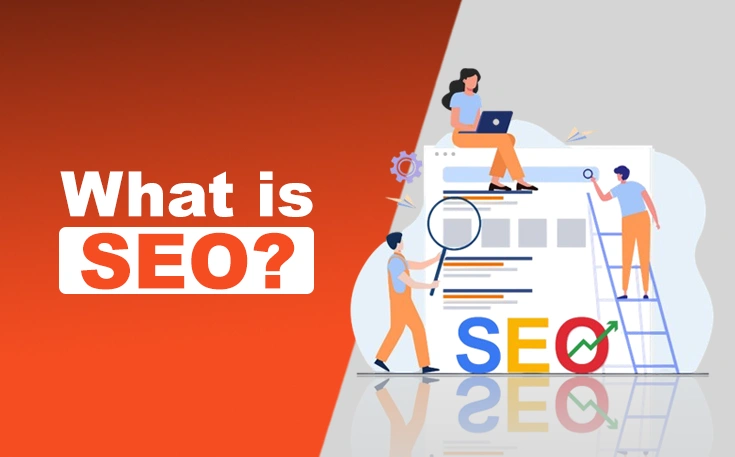
SEO (Search Engine Optimization) is the process of improving your website so it can be discovered by the right people through Google, AI search engines, and other search platforms.
In 2026, SEO is no longer just about keywords or rankings. It’s about creating trustworthy content, solving real user problems, and becoming a source that both search engines and AI trust.
After 15 years of working in SEO, I’ve never seen search evolve this quickly.
Google AI Overviews, ChatGPT, Gemini, and other AI tools have changed how people find information, but they haven’t replaced SEO.
Throughout this guide, I’ll share the strategies, lessons, and real-world examples my team and I use at WebTech Solutions to help businesses earn sustainable organic growth.
What is SEO?
SEO is the process of making your content so credible, structured, and unique that search engines (like Google) and AI models (like Gemini, Claude, and OpenAI) choose your information to present to the user.
In 2024, Search Engine Optimization used to be defined as “optimizing for search engine results pages.” In 2026, we define it as Visibility Optimization.
Every element, down even to a favicon, contributes to a cohesive brand identity that AI bots now recognize as a “Real World Entity.”
Why the Old Keywords Don’t Work Alone?
In the past, you could engage in keyword stuffing, like shoving terms like “best coffee maker” into a post to rank. Today, Google uses Deep Neural Networks to understand intent.
It doesn’t care if you used the keyword five times. It cares if you actually answered the user’s underlying problem. This is why SEO should be your priority, as it has shifted from a technical chore to a fundamental business strategy.
If you need more information about SEO’s importance, you can read my article on the proven benefits of SEO for businesses.
How AI Search Actually Works?
Modern search engines no longer just find pages. They read them.
Using a process called Retrieval-Augmented Generation (RAG), AI models like Gemini or GPT-4o search the web for the most reliable facts (Retrieval) and then combine them into a single, cohesive response (Synthesis). To rank, you must be the most “retrievable” source.
The 3 Stages You Should Cover:
- The Crawler (The Librarian): Google still crawls the web, but now it maps “Entities” (People, Places, Things) instead of just keywords.
- The Vector Database (The Memory): Your content is turned into “Vectors” (mathematical representations of meaning). If your content is generic, its vector looks like everyone else’s and gets ignored.
- The LLM (The Narrator): The AI takes the best “vectors” and writes the summary. This is where citations happen. If your data is unique, the AI has to cite you to maintain accuracy.
How to Get Traffic When AI Answers Everything?
In 2026, the goal of SEO has shifted from winning the “Click” to winning the “Citation.”
While AI Overviews provide the what, users still click through for the how, the who, and the proof. To maintain traffic, you must optimize for “Zero-Click” visibility and position your site as the indispensable resource that the AI summary cannot replace.
1. Optimize for the Utility Click
AI is great at summarizing facts, but it’s terrible at providing tools. To get traffic, move your value proposition beyond information.
- Templates & Checklists: If the AI explains “How to do a technical audit,” provide the downloadable .XLSX template.
- Calculators & Interactive Tools: AI can explain interest rates, but users will click to use your “2026 Mortgage Amortization Calculator.”
- Proprietary Data: When you are the primary source of a statistic, the AI citation acts as a high-authority referral link.
2. Capture Micro-Intent Queries
AI summaries are often broad. Traffic in 2026 lives in the long-tail of the long-tail.
- The Specific Scenario: Instead of targeting “SEO Tips,” target “SEO strategies for SaaS companies facing a 40% traffic drop.”
- The Human Perspective: AI cannot provide an opinion. Use H2s like “Why we stopped using [Popular Tool] in 2026” to capture users looking for subjective experience rather than objective facts.
3. Master the Entity-Brand Loop
One of the most powerful traffic drivers in the AI era is Direct Brand Search.
- If your content is consistently cited by Gemini or Perplexity, users begin to associate your brand with the topic.
- Eventually, they stop searching for “SEO guide” and start searching for “WebTech Solutions SEO guide.”
- This “Brand and Keyword” search bypasses the AI summary and takes the user directly to your site, effectively “AI-proofing” your traffic.
4. Bridge the Trust Gap with Video Evidence
AI can hallucinate; video doesn’t. When you embed original video content within your articles, you provide “Proof of Life.”
- The “Dwell Time” Signal: When a user clicks from an AI summary to see your video demonstration, your dwell time skyrockets.
- Multimodal Advantage: Google’s “Perspectives” tab prioritizes first-hand video. If the AI summary doesn’t satisfy the user’s need for visual proof, your video becomes the primary destination.
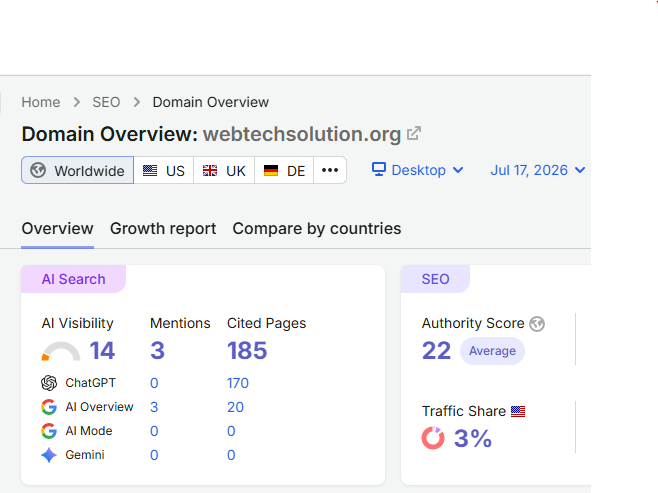
Pro Tip: Stop checking “Rankings” and start checking “Inclusion Rate.” If your brand is mentioned in the AI response, you are winning the new version of the 1st spot.
My Golden Rule of SEO Ranking in 2026: Information Gain
If I could give you only one piece of advice to rank today, it’s this: Provide Information Gain.
AI models are trained on the “average” of the internet. If you write an article that says exactly what every other article says, Google’s AI (SGE) will simply summarize that collective data, and nobody will ever click your website.
To rank in 2026, you must provide something the AI doesn’t already have:
- First-hand experiments: “I tested these 10 products for 30 days.”
- Unique data: “We surveyed 500 small business owners in Spain.”
- Contrarian opinions: “Why the common wisdom about X is actually wrong.”
- Personal anecdotes: Real-world “boots on the ground” experience.
If an AI can write your entire article without your help, your article has zero “Information Gain” and will not rank. This is a core pillar of white hat SEO, which focuses on long-term sustainability rather than shortcuts.
Essential SEO Techniques I Still Implement in 2026
If you want to move the needle this year, you have to stop thinking about SEO as a list of chores and start thinking about it as building a digital ecosystem. In 2026, Google doesn’t just “rank” pages; it “assembles” answers.
Here is how you make sure your content is the primary ingredient in those answers.
1. On-Page SEO: Mastering Contextual Relevance
We used to optimize for keywords back in 2023 or 2024. Now, we optimize for entities and relationships. If you want to optimize on-page SEO of your website, you must look beyond the text.
a) The Semantic Triplet Strategy
Semantic SEO is now the backbone of content creation. When you cover a topic, AI looks for “connected nodes.”
To master this, you must understand search intent in SEO and use NLP terms in SEO to mimic natural human expertise. It would be better if you read my guide for using LSI keywords, as it helps you find these related concepts (triplets) that prove you understand the subject deeply.
b) The “AI-Bait” TL;DR Snippet
Since most users now see an AI summary before they see your site, you want the AI to use your words.
Place a 60-word summary at the very top of your article. Use “Is” or “Are” statements (e.g., “SEO is…”) to make it easy for Large Language Models (LLMs) to scrape and credit you as the definitive source.
c) Conversational FAQ & Voice Mapping
With the rise of Gemini Live and other voice-first AI assistants, people are asking complex, multi-part questions.
Don’t just answer “What is SEO?” Answer “How does SEO change for a small business using AI-generated images?” Use Speakable Schema to tell Google which parts of your text are best suited for being read aloud.
d) Image SEO & Visual Gains
AI is now multimodal. This means image SEO is critical. You can now get clicks and impressions for them as well if they get ranked in the SERP. And ultimately, it will result in a huge boost in your website traffic.
For Image SEO, you should add:
- ALT Text
- Caption
- Description
And one thing that bothers the audience pretty well is the role of the image file name. To help you find the answer, I have created an article on “Does image file name affect SEO?” Just read it, and you will find the answer.
2. Technical SEO: Important to Reduce Bounce Rate
Technical SEO is no longer optional. It’s now one of the most essential SEO elements to get ranked in the SERP and cited in AI responses. If your site is broken, AI won’t cite it, and humans won’t stay.
a) Performance & Audits
You must conduct annual SEO audits to catch common technical SEO issues. A technical SEO audit for small business website can reveal SEO issues stopping your site from ranking.
b) Modern Infrastructure
- Sitemaps: Understanding sitemap uses tips ensures every page is indexed.
- Caching: Knowing what is app cache helps with speed.
- Architecture: Google recommends hierarchical site structure because it makes your site a logical library.
You should also consider how server architecture can influence SEO, and even specialized topics like how does kubernetes security affect SEO.
c) Interaction to Next Paint (INP) Optimization
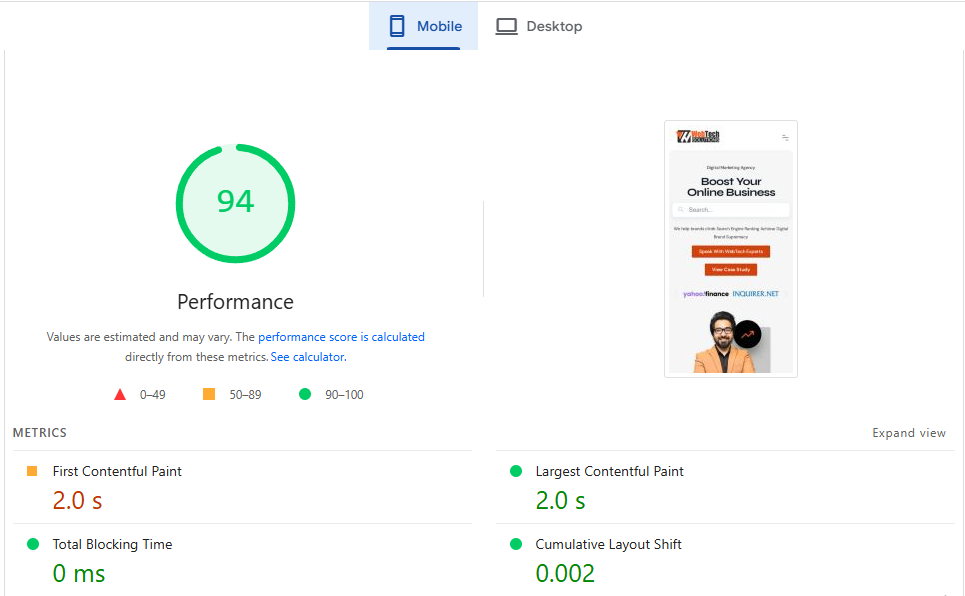
The barrier between design and SEO has vanished. UX design directly impacts search rankings through metrics like “Interaction to Next Paint” (INP).
This is the heavyweight champion of speed metrics in 2026. It measures the latency of every interaction on your page.
If a user clicks a “Search” bar or a “Dropdown” menu and there is a delay, your INP score suffers. And if your site is frustrating, your bounce rate will skyrocket, signaling to Google that you aren’t the best answer.
To fix this, you need to minimize heavy JavaScript execution and ensure your main thread stays free for user input.
d) SGE & Bot Accessibility
In 2026, there’s a new type of “SEO” called Bot-Specific Optimization. You need to ensure your site’s robots.txt and CORS settings allow AI agents (like Google’s Google-InspectionTool) to render your content fully.
If the bot can’t see the “rendered” version of your site, the AI won’t cite you in its snapshots.
e) Logical Knowledge Silos
You should use a “Hub and Spoke” architecture. Create one massive “Pillar” page and link it to dozens of smaller, hyper-specific “Spoke” articles. This tells the search engine, “I am not just an author of one post; I am a library of this specific topic.”
3. Advanced Keyword Strategy: The Intent-First Approach
In 2026, keyword research for SEO focuses on clusters rather than individual terms. Instead of fighting for “Main keywords,” focus on long-tail keywords for SEO.
These often are low KD keywords, which makes them easier to win. For those in competitive niches, identifying high CPC keywords can help you align your organic strategy with high-value commercial intent.
Also, you need to read my keyword clusters guide to group your content. It helps you avoid “keyword cannibalization” and builds topical authority.
4) The Content Structure Hierarchy
Content structure is the map for both humans and bots. Therefore, you have to make your content scanable and readable to make sure you can get cited in the responses generated by AI.
Also, you should use subheadings effectively to break up walls of text. Furthermore, don’t ignore the “small” things like:
- Slug in SEO: Keep them short and descriptive.
- Meta Description: This is your “sales pitch” in the search results.
- Meta Title: Should be unique, under 60 characters, and according to users’ intent.
To get cited by AI tools like Gemini or Perplexity, your content must be structured like a database but read like a conversation.
a) Micro-Intent Targeting
Stop going after “head terms” with massive competition. Instead, find “Micro-Intents” the specific, long-tail questions that people ask in the middle of a project. Instead of “SEO for Beginners,” try “How to fix schema markup errors for local service businesses.”
b) Advanced JSON-LD Schema
You should be using more than just the “Article” schema. Use about, mentions, and author properties to link your content to other known entities. Tell the search engine exactly who you are and what other authoritative sources you are referencing.
c) Visual Information Gain
AI is great at text, but it’s still playing catch-up with visual data analysis. Include original screenshots, custom-designed data charts, and “Talking Head” videos.
When an AI summarizes your article, it will often say “As seen in this data by [Your Brand],” giving you a valuable visual citation.
5. Off-Page SEO: Building Brand Reputation
Even in the AI era, backlinks are still like votes of confidence. But the days of buying 500 cheap backlinks are over. In fact, doing that in 2026 is a fast track to a manual penalty.
Off-page SEO is now synonymous with Brand Reputation. It is the ultimate proof of trust. And that’s why link building is the backbone of digital growth in 2026. But you need to be very specific in their selection.
- Do-Follow vs No-Follow: Learn the difference between do-follow links and no-follow links, as they both are important for ranking.
- Guest Blogging: There are massive SEO benefits of guest blogging when done on high-authority sites.
To help you further, I have created a full do-follow link vs no-follow link comparison so you can understand it better.
a) Niche-Specific Digital PR
Instead of “Guest Posting” on random blogs, focus on Digital PR. This means getting mentioned in industry-specific journals, news sites, or high-authority podcasts.
A single mention from a site like TechCrunch or a niche-leading trade site carries more weight than 5,000 low-tier links because it proves to Google that you are a “Real World Entity.”
b) Social Search Signals
People are using TikTok, YouTube, and LinkedIn as search engines. Google tracks the “buzz” around your brand on these platforms. If people are talking about your brand on social media, Google’s AI associates your brand name with your industry, boosting your Authoritative Score.
c) Entity Brand Searches
One of the strongest signals in 2026 is how many people search for your brand by name. If users search for “WebTech Solutions SEO guide” instead of just “SEO guide,” it tells Google you are the preferred expert.
You can learn more details in my article “Why link building is essential?”
6. Winning the Trust of AI: E-E-A-T
Google’s search quality evaluator guidelines revolve around E-E-A-T, which stands for Experience, Expertise, Authoritativeness, and Trustworthiness. That’s why I have created a guide through which you can master EEAT.
If your content lacks these signals, you won’t be able to rank and get citations. And it is one of the most critical signs your website needs an SEO consultant.
Whether you are deciding on in-house SEO vs hiring an SEO agency, the goal remains the same: project authority.
7. The Rise of AEO and GEO
In 2026, the digital landscape has fractured into a dual-dominance of Answer Engine Optimization (AEO) and Generative Engine Optimization (GEO).
We have moved beyond “blue links” into the AIO search engine era, where visibility is defined by being the chosen response for AI models.
a) Understanding AEO (Answer Engine Optimization)
So, what is AEO? It is the discipline of optimizing content specifically for Answer Engines, which are the platforms that provide a single, definitive response rather than a list of options.
Mastering AEO in SEO requires pivoting toward high-density “Answer Capsules” that voice assistants and AI snapshots can easily parse and read aloud.
If you’re looking to partner with specialists who understand these algorithms, check out Webtech Solution’s guide on choosing an AEO agency to ensure you pick a team that delivers real generative search results.
b) Influencing AI with Generative Engine Optimization (GEO)
As algorithms evolve,Generative Engine Optimization (GEO) has emerged as the strategy to ensure your content is the primary data source for Large Language Models.
GEO focuses on information gain and source credibility, which ensures that when an AI synthesizes a topic, your brand is the cited authority.
c) Google vs. LLMs: The Shift in Optimization
The Google vs LLMs optimization battle is the defining conflict of 2026. While Google remains a giant, users increasingly use LLMs to bypass traditional SERPs for complex tasks.
If you are a large-scale organization, to stay relevant and competitive in this AI era, you should follow my enterprise guide to buying LLM-powered seo services. It will help you learn how to automate your authority and maintain dominance in a world where AI determines credibility.
8. Local SEO: The AI-Driven “Near Me” Strategy
In 2026, Local SEO is about appearing in the AI-Local-Pack. To optimize your brand or website, you have to follow these tactics in 2026:
a) Google Business Profile (GBP) 2.0
Your GBP profile is now your second storefront. You must use the “Products” and “Services” sections to their full extent.
AI uses the descriptions in your Google Business Profile to decide if you are a “match” for a local query. Update your “Business Posts” at least twice a week to show activity.
I have already covered “How to Get Your Business on Google,” so you can find it easier to start your journey.
b) Hyper-Local Narrative
National brands can’t talk about your specific neighborhood’s local charity event or the specific road construction affecting your customers.
When you start writing about these “hyper-local” details, you gain a massive advantage in “Geographic Relevance” that global competitors can’t match.
c) Review Sentiment Analysis
Google’s AI now reads your reviews to understand your “vibe.” It looks for keywords in customer feedback. Encourage customers to be specific, like instead of “Great service,” a review saying “Best SEO agency for plumbers in London” helps the AI categorize your business perfectly.
And if you can’t do it yourself, you can Contact Us to get the benefits of our high-end Local SEO Services to compete in 2026 and beyond.
9. Video SEO: The Proof of Life
According to the 2026 SEO Statistics report by AIOSEO, Google now includes video thumbnails in 26% of all search results.
In the AI era, video isn’t just “content.” It is the ultimate proof of Experience. While AI can write a perfect blog post, it cannot (yet) authentically film itself performing a task. This makes video your strongest “Information Gain” signal. That’s why Video SEO is indispensable.
a) Multimodal & Short-Form Indexing
Google now natively indexes clips from TikTok, YouTube Shorts, and Instagram. To rank, your video needs a “Textual Anchor.” This means providing a full, keyword-rich transcript or a detailed summary.
It also allows AI models (like Gemini) to “read” your video and cite it in AI Overviews.
b) Key Moments & Chaptering (VideoObject Schema)
You must use VideoObject and Clip structured data to define “Key Moments.” When you manually set these timestamps, you tell Google exactly which 10-second window contains the answer to a specific user question.
If the AI can skip the user directly to the solution, you are 50% more likely to win the citation.
c) Video as “Trust Evidence
Embedding a video of you doing the work, whether it’s an SEO audit or a product teardown, serves as a primary source of data. AI tools now prioritize “Verifiable Evidence.”
A video embedded on your page increases dwell time and sends a powerful signal to the algorithm that your page isn’t just AI-generated fluff.
Pro Tip: If you are running a YouTube channel for your brand, you can get help from my YouTube SEO Guide, because it is now a non-negotiable part of the funnel.
10. Voice SEO: Essential for the Virtual Assistant Era
In 2026, we are living in the “Search Volume Cliff” era. A landmark study by Search Engine Land confirms that 37% of consumers now start their information journey directly with an AI assistant (like Gemini, Siri, or Alexa) rather than a search bar.
This shift has birthed a new discipline: Voice Search Optimization.
a) The “Winner-Takes-All” Dynamic
Traditional search gives you 10 blue links; voice search gives you one answer. To be that one answer, your content must be structured in a “Question-First” format.
Use H2 or H3 headers as questions (e.g., “How do I fix INP errors?”) followed immediately by a 40–60 word “Answer Capsule” that the AI can easily read aloud.
b) Natural Language Processing (NLP)
Stop using stiff, robotic keywords. People don’t say “SEO Agency in the USA” into their phones. Instead, they ask, “Who is the best SEO specialist near me right now?” Your content should mirror the way humans speak, using long-tail, conversational phrases and a direct, helpful tone.
c) Speakable Schema (Beta)
Implement the Speakable schema markup. This tells Google Assistant and other AI exactly which parts of your article are “speech-ready.”
When you start marking up 2–3 sentences of your key insights, you’re essentially handing the AI a script to read, which ensures you get the credit and the brand mention during a voice interaction.
SEO vs AEO vs GEO
| Aspect | SEO (Search Engine Optimization) | AEO (Answer Engine Optimization) | GEO (Generative Engine Optimization) |
|---|---|---|---|
| Primary Goal | Rank web pages in search results | Become the direct answer to a user’s question | Get cited by AI models in generated responses |
| Optimizes For | Google, Bing, and traditional search engines | Google AI Overviews, voice assistants, featured snippets | ChatGPT, Gemini, Claude, Perplexity, Copilot, and other AI search engines |
| Content Focus | Comprehensive, keyword-targeted pages | Clear, concise answers to specific questions | Original, trustworthy, experience-based content with unique insights |
| Success Metric | Organic rankings and clicks | Featured snippets, AI answers, and voice results | AI citations, brand mentions, and referral traffic from AI platforms |
| Example | Writing a complete guide titled “What Is SEO?” | Adding a 50-word answer under “What is SEO?” that Google can display directly | Publishing original SEO research that ChatGPT or Gemini cites when explaining SEO |
SEO Tools I Have Used In My Career
Now, you have learned all the SEO tactics to raise search ranking to instantly increase traffic to your website. Next, finding the right SEO tools for small businesses is vital.
Ahrefs is the one that WebTech Solutions and its whole team use. You can check our Ahrefs review,Ahrefs pricing, and the Ahrefs backlink checker guides.
Besides, I am mentioning all the SEO tools that I have used throughout my career, and I still count on them when I want to create a complete and perfect SEO strategy.
a) Heavyweight SEO Tools
If you are at the beginning stage of learning SEO, Ahrefs can be a bit overwhelming. So, I would recommend using Moz. I have also covered a guide on Using Moz SEO for keyword research.
b) On The Go Tools
- Google Analytics
- Google Search Console
- DAPA Checker by WebTech Solutions
- Free SEO Tools from Google
- Google Sheets
- Rank Tracking Software
- SEO Site Checker Tools
Consider it my advice to add Google Search Console to your bookmarks and open it every day. It will readily let you know how your site is performing and if your strategy needs refinement. Also, you can fix crawl errors in Search Console, which is essential for SEO.
c) WordPress Plugins
While I have already covered an article on essential WordPress plugins for business websites, I have mentioned some names below that are “Must.”
While you can’t have RankMath and Yoast SEO simultaneously, you should go through my Yoast vs RankMath article to learn which of them can be your perfect pick.
And if you want to improve the look of your site, my take on “Best Plugins to Enhance WordPress Blog” will definitely help you.
d) Must Read Comparisons
And I know I have named many SEO tools above, and you might be thinking which one you should choose. While I have already mentioned my preference, not everyone can love the same.
So, for your assistance, I have made some key comparisons between different SEO tools, so you can get help from them and decide on the one.
Industry-Specific Guides & Hiring Strategies I Have Written
Sometimes, you need specialized help. Whether you’re looking for google news SEO tips or trying to find the best SEO companies, the choice depends on your location and niche.
Global & Regional Leaders:
- Best SEO agency in the USA
- Top SEO agencies in London
- Top search engine optimization companies in Malta
- SEO agency in Australia Appkod
- Egochi Miami SEO agency and Egochi Milwaukee SEO agency
- JustOctane SEO company Boca Raton
- Chichester-based SEO company
- SEO agency in Edmonton
Specialized Services
If you are looking to scale, you might need small business SEO services agencies. You can also hire niche experts:
- How to hire SEO content writer
- How to hire technical SEO services
- Considerations for hiring an e-commerce SEO agency
- LinkGraph white label SEO agency
- Amazing benefits of working with a link building company
Before deciding, you must understand the benefits of working with SEO consulting agencies. In this way, you can get the maximum out of your contract.
And if you want to do SEO on your own, you might want to know how to become an SEO specialist or understand the role of SEO in online reputation management.
Final Thoughts: What’s the Future of SEO?
SEO in 2026 isn’t about “gaming the system.” The algorithms are too smart for that now. From emerging web technologies to automating search data collection, the field is constantly evolving.
Don’t write for the “bots.” Instead, write for the person sitting on the other side of the screen who is searching Google or typing a URL. If you win the user’s trust and avoid SEO mistakes US websites make, you’ll win the algorithm’s favor.
Keep an eye on the top SEO trends and never stop providing Information Gain.
People Also Ask
Ranking a site on search engine results is a time-consuming process. So, results will take time to show up.
Yes. You can do it if you have proper knowledge of SEO.
Absolutely. SEO is necessary for entertainment sites as well.
Not all SEO tools work without purchasing a premium plan. Although they offer free plans, you have to purchase the membership to unlock full potential.
Need custom app with amazing features?
Get a Quote