Search engines no longer rely on traditional SEO practices, exact keywords; they focus on meaning, intent, and context. This is where Semantic SEO comes in.
It is the practice of optimizing content so Google and AI understand what your page truly means using semantic search, Natural Language Processing (NLP), and semantic markup to connect related topics and entities.
From my experience working with SEO content, keyword-focused pages often rank briefly and then lose visibility. But, shifting to topic-based optimization covering user intent, related entities, user questions, and intent clusters leads to more stable rankings and wider reach.
Moving next, I will explain what Semantic SEO is, how it works, its benefits, and how to align content with user intent semantically.
What is Semantic SEO?
Semantic SEO is the process of optimizing content based on context rather than just exact keywords. It focuses on related terms, structured data, and comprehensive answers so search engines can understand context.
How Does Semantic SEO Work?
Search engines like Google use Natural Language Processing (NLP) and AI to understand content and user intent. Instead of matching exact long-tail keywords, Google interprets the meaning behind searches and related entities.
This is powered by key algorithm updates:
- Hummingbird (2013): Improved understanding of search intent
- RankBrain (2015): Introduced AI-based ranking and query interpretation
- BERT (2019): Enhanced understanding of natural language and context
With these updates, Google focuses less on exact keyword matching and more on semantic relationships, topical relevance, and intent behind queries.
Benefits of Semantic SEO
Here are some key benefits of Semantic SEO that demonstrate why it’s so important for modern search visibility:
1. Improved Search Rankings
Semantic SEO improves rankings because it focuses on search intent rather than exact keywords. Google prioritizes pages that deliver in-depth, contextual, and meaningful answers.
When your content writing strategy aligns with user intent and covers related topics, entities, and queries, your content becomes more relevant and naturally ranks higher in search results.
2. Better User Experience
Semantic optimization improves user experience by structuring content logically and answering questions directly. When users can quickly find relevant information, it reduces bounce rates and increases engagement.
3. Increased Click-Through Rate (CTR)
SEO-friendly content optimized for semantic search, AEO, and GEO has a higher CTR and a higher chance of appearing in featured snippets, knowledge panels, AI Overviews, and People Also Ask (PAA) sections.
If you want to scale this strategy for your brand, you can partner with the best AI visibility agencies to dominate these conversational search formats
This improves visibility and attracts more clicks by matching user intent more precisely and answering queries directly on the results page.
4. Higher Authority and Trust
Semantic SEO strengthens authority by using structured data and connecting content with relevant, authoritative sources.
This improves credibility, helps search engines better understand context, and increases trust signals. This is how your content is more likely to rank higher due to improved perceived expertise and relevance.
5. Voice Search Optimization
Voice assistants like Siri and Google Assistant have made voice search essential. Google queries are now more conversational. Semantic SEO optimizes content for natural language queries, user intent, and question-based searches.
It matches how people speak and search, increasing the chances of appearing in voice search results, featured snippets, AI Overviews, AI models like ChatGPT, and others, such as Perplexity, Claude, and Gemini, and other intent-driven SERP features.
Best Practices for Ranking Higher with Semantic SEO
Here are some of the best Semantic SEO practices I use to rank higher in Google SERP you can also opt for:
1 – Focus on Search Intent
Understanding the context behind user queries is essential in Semantic SEO. Search intent is typically classified into:
- Informational: Users seek knowledge, such as “What is White Hat SEO?”
- Navigational: Users look for a specific site, such as “Grammarly Plagiarism Checker.”
- Transactional: Users intend to take action or purchase, i.e., “Buy SEO site checker tools online.”
- Commercial Investigation: Users compare options, for example, “Best blogging platforms.”
Optimizing content based on intent helps match user expectations, improves relevance, and increases visibility across search results.
2. Use Topic Clusters Instead of Isolated Keywords
Instead of optimizing for individual keywords, structure your content around broad topics with related subtopics.
Example
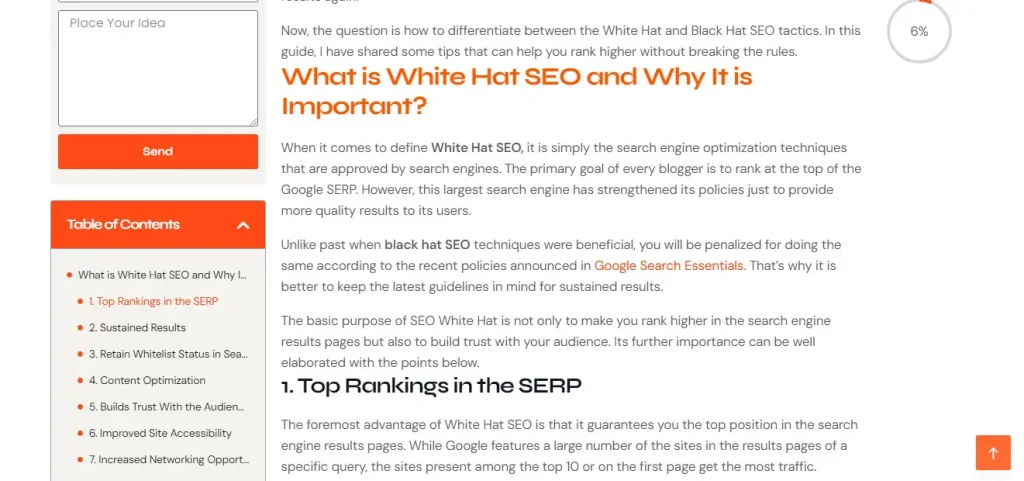
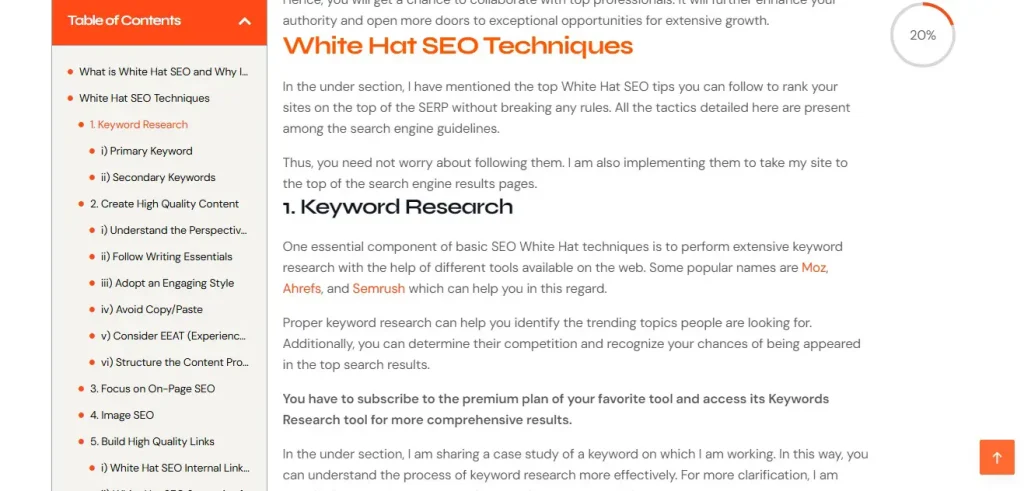
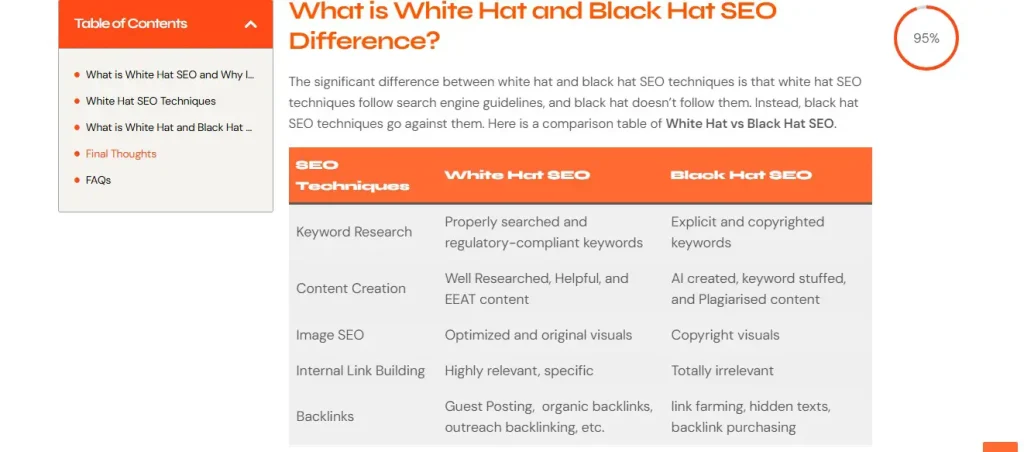
If your main topic is “White Hat SEO,” you can create subtopics like:
- Importance of White Hat SEO
- White Hat SEO Techniques
- Difference Between White Hat SEO and Black Hat SEO
This approach enhances domain authority and boosts the rankings of your website. However, you have to make sure that you are providing your users with the desired solutions. Otherwise, Google is not going to give you an edge.
3. Optimize for Related Keywords and Synonyms
Google understands synonyms, related terms, and context, so relying on a single keyword is ineffective. While semantically optimizing, you must focus on using keyword variations and natural language to match user intent and expand topical relevance.
Let me give you an example:
When searching “White Hat SEO” on Google, the following queries appear in the “People Also Ask” section.
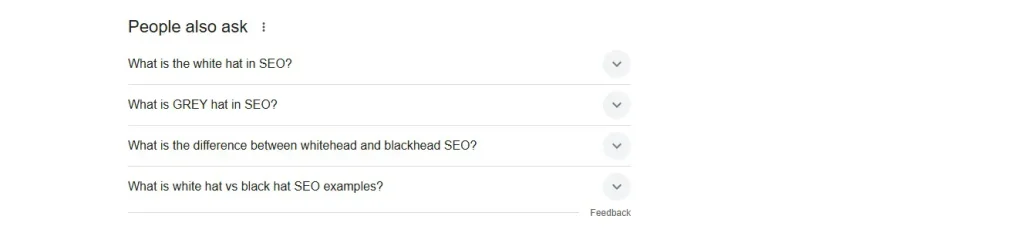
That’s why I have added them to my ‘White Hat SEO” guide to make it more comprehensive and useful for users. Including these queries in your content improves coverage, aligns with real user questions, and increases the chances of ranking for multiple keywords.
You should also follow and implement this Semantic SEO tactic to maximize the chances of your articles getting higher rankings on SERP and a broader set of searches.
4. Use Structured Data Markup (Schema Markup)
Structured data using Schema.org helps search engines better understand content and display rich results. It improves visibility, enhances SERP features, and supports semantic SEO.
Common schema types include:
- FAQ Schema: Targets People Also Ask (PAA) and question-based results
- Article Schema: Improves blog visibility and indexing
- Breadcrumb Schema: Strengthens site structure and navigation
- Product Schema: Enhances e-commerce listings and rich results
5. Write in a Conversational Tone for Voice Search
As I already mentioned, Voice search is growing, and queries are becoming more conversational. Writing in a natural, question-based tone helps content align with user intent.
Effective tactics include:
- Use long-tail, natural language keywords
- Answer common questions clearly and concisely
- Structure content in a Q&A format to match search behavior
6. Create Comprehensive, Long-Form Content
Google prioritizes in-depth content that covers topics thoroughly and aligns with E-E-A-T (Experience, Expertise, Authoritativeness, Trustworthiness). Long-form content gives a competitive edge by improving topical authority and relevance.
To achieve this, perform complete keyword research and cover related topics, entities, and queries alongside your primary keyword.
Best practices include:
- 1500+ words for comprehensive coverage
- Short, clear paragraphs for readability
- Bullet points and subheadings to structure information
This approach improves semantic coverage, user experience, and ranking potential across search results.
7. Optimize Internal Linking
Internal linking improves navigation, distributes link equity, and strengthens topical relevance. Linking pages that cover the same core topic helps search engines understand content relationships and site structure.
Best practices include:
- Link related articles naturally within content
- Use descriptive, intent-focused anchor text
- Build pillar pages supported by cluster content
This enhances semantic connections, improves crawlability, and supports higher rankings across related queries.
Example
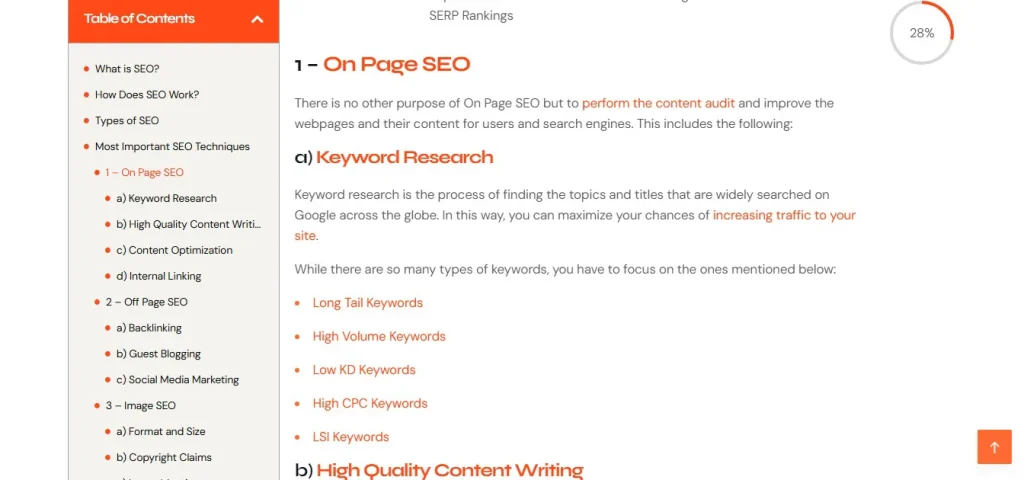
Just have a look at my “What is SEO” guide. This blog post is a perfect example of Semantic SEO and internal linking, as I have covered everything that comes under the umbrella of search engine optimization. Also, I have linked the relevant guide to deliver maximum benefits to the users.
8. Use Latent Semantic Indexing (LSI) Keywords
Latent Semantic Indexing (LSI) keywords are contextually related terms that improve content relevance and semantic coverage. They help search engines understand topic relationships beyond primary keywords.
Using LSI keywords alongside high-volume and high-CPC keywords strengthens topical depth and visibility.
Best practices include:
- Use tools like LSIGraph and Google Autocomplete to find related terms
- Integrate keywords naturally within content
It improves semantic relevance, supports intent matching, and increases ranking potential across related queries.
9. Optimize for Featured Snippets
Featured snippets appear at the top of search results and drive high visibility and clicks by answering queries directly. Optimizing for them improves traffic and authority.
Best practices include:
- Answer questions clearly within 40–50 words
- Use bullet points and numbered lists for structured answers
- Implement structured data (schema markup) to support eligibility
This approach aligns with user intent, improves chances of appearing in position zero, and increases visibility across SERP features.
10. Improve Page Load Speed and Mobile-Friendliness
Google prioritizes fast-loading, mobile-friendly websites because they improve user experience and engagement. Page speed and responsiveness are key ranking factors.
Best practices include:
- Optimize images to reduce load time
- Use a CDN (Content Delivery Network) for faster delivery
- Ensure responsive design across all devices
You can use platforms like WPDevShed and ThemeForest to find responsive, mobile-friendly WordPress themes.
This approach improves performance, usability, and ranking potential across devices.
11. Enhance Content with Multimedia
Multimedia elements like images, infographics, and videos improve engagement, retention, and content clarity. Along with focusing on formats such as WebP, JPG, and PNG, prioritize high-quality, informative visuals that support your topic.
Best practices include:
- Use relevant images with optimized alt text for Image SEO
- Embed videos and apply YouTube SEO to increase dwell time
- Create infographics to simplify complex topics
This approach improves user experience, supports semantic understanding, and increases visibility across image and video search results.
12. Monitor Performance and Optimize
Lastly, monitor performance in Semantic SEO to identify gaps and improve rankings over time. Regular optimization helps you stay competitive and aligned with search intent.
Key tools include:
- Google Search Console to track rankings, indexing, and errors
- Google Analytics to analyze user behavior and traffic patterns
- Ahrefs or SEMrush to monitor backlinks and keyword performance
This approach ensures continuous improvement, better visibility, and long-term SEO growth.
My Final Thoughts: Why Semantic SEO Is the Future of Search Optimization
These are the key details about Semantic SEO and how it can help you rank higher in SERPs. In short, this advanced SEO approach is shaping the future of search and blogging. You can significantly improve rankings, user experience, and organic traffic by focusing on user intent, context, entities, and structured content.
I’ve also covered essential best practices along with supporting strategies like Technical SEO and social media marketing to make your website more optimized and search-friendly. When applied correctly, Semantic SEO helps you achieve stronger visibility, higher rankings, and more consistent organic growth.
Need custom app with amazing features?
Get a Quote