If you are still searching for the single best AI video model in 2026, you are probably asking the wrong question. After spending time comparing today’s leading models, I have found that there is no universal winner.
Every model excels at a different part of the production process. Some are built for longer storytelling, others shine in cinematic visuals for social media platforms, while a few are designed for fast commercial work with excellent editing controls.
Instead of chasing whichever model sits at the top of a leaderboard this week, it makes far more sense to understand where each one fits.
In this guide, I will take you through the best AI video models that creators are actually using and explain where each one performs best.
Quick Ranking of the Best AI Video Models in 2026
| Rank | Model | Best For |
|---|---|---|
| 1 | Gemini Omni Flash | Multimodal video creation and natural language editing |
| 2 | Seedance 2.5 | Long form production with extensive reference support |
| 3 | MiniMax H3 | Short commercial videos with multimodal capabilities |
| 4 | Wan 3.0 | Storytelling with document and web based references |
| 5 | Kling 3.0 | Dynamic camera movement and cinematic action |
| 6 | Veo 3.2 | Premium photorealistic commercial production |
| 7 | Happy Horse 1.1 | Short dramas and ecommerce advertising |
Honorable: Seedance 2.0 (still arena-strong), FLUX 3 (up to ~20s multimodal AV). Runway Gen-4.x remains a camera-control specialist. OpenAI Sora 2 is not ranked for new pipelines — consumer access wound down earlier in 2026, and API sunset messaging makes it a weak foundation for shipping plans.
How I Ranked These AI Video Models?
Ranking AI video generators is not as simple as comparing benchmark scores or marketing claims. The models in this list are evaluated the same way production teams evaluate them after completing real projects.
Instead of looking at a single number, I considered several practical factors that determine whether a model is useful in day-to-day work.
1. Preference Quality
Blind preference leaderboards such as Artificial Analysis Video Arena and similar community rankings provide a good starting point.
They reveal which videos people naturally prefer without knowing which model created them. While these rankings are valuable, they are only one part of the equation.
2. Control and Editing Features
A powerful model should give creators more than a prompt box. Reference images, first and last frame controls, natural language editing, timestamp-level fixes, and multimodal inputs all contribute to a smoother production workflow.
3. Video Length
Some models only generate short clips that work well for social media, while others can complete much longer story sequences.
That difference becomes important when working on advertisements, branded content, or cinematic projects.
4. Native Audio
Modern AI video models increasingly generate synchronized audio alongside visuals. This removes the need for separate sound generation and creates a more complete production workflow.
5. Production Readiness
Finally, I looked at how practical each model is for real projects. A technically impressive model means very little if it cannot fit into a production pipeline.
Comparison of the Best AI Video Models in 2026
Before getting into each model individually, it helps to compare the best AI Video models side by side. Every option below targets a slightly different workflow, which is exactly why there is no single winner.
| Model | Typical Length | Biggest Strength | Native Audio |
| Gemini Omni Flash | Around 10 seconds | Multimodal editing and transformations | Yes |
| Seedance 2.5 | Up to 30 seconds | Large reference packs and timestamp editing | Yes |
| MiniMax H3 | Around 5 to 15 seconds | Commercial content with multimodal references | Yes |
| Wan 3.0 | Around 30 seconds | Document and webpage aware storytelling | Yes |
| Kling 3.0 | Around 15 seconds | Cinematic motion and multi shot scenes | Yes |
| Veo 3.2 | Short to medium | Photorealistic visuals and lip sync | Yes |
| Happy Horse 1.1 | Short clips | Ecommerce and dramatic storytelling | Yes |
1. Gemini Omni Flash – Best All Round Multimodal Director’s Model
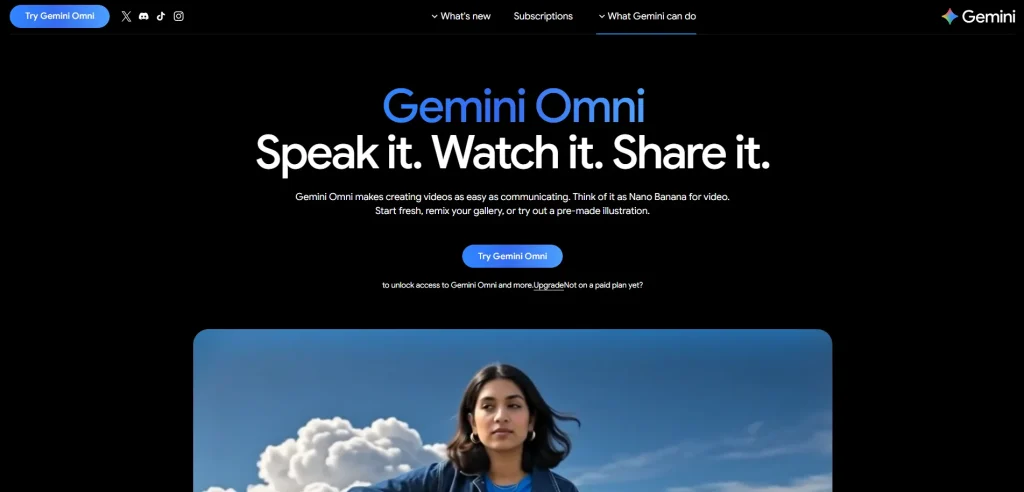
When people ask me to recommend just one AI video model, Gemini Omni Flash is usually the first name that comes to mind.
The reason is simple. It combines high-quality generation with one of the strongest editing experiences available today. Instead of generating a clip and starting over every time something looks wrong, you can simply describe the change in natural language. That makes the creative process much faster.
Gemini Omni Flash also performs extremely well in blind preference rankings, where viewers consistently rate its videos among the best.
It works especially well when you need:
- Fast Commercial Production: Creating short promotional videos for Instagram and TikTok becomes much easier because you can quickly refine scenes without rebuilding everything from scratch.
- Multimodal Editing: The model accepts text, images, audio, and video references, making it flexible enough for many creative workflows.
- Simple Revisions: Natural language editing removes much of the trial and error that older video generators required.
The only major limitation is clip length. If your project requires a continuous story lasting 25 or 30 seconds, another model is usually a better fit.
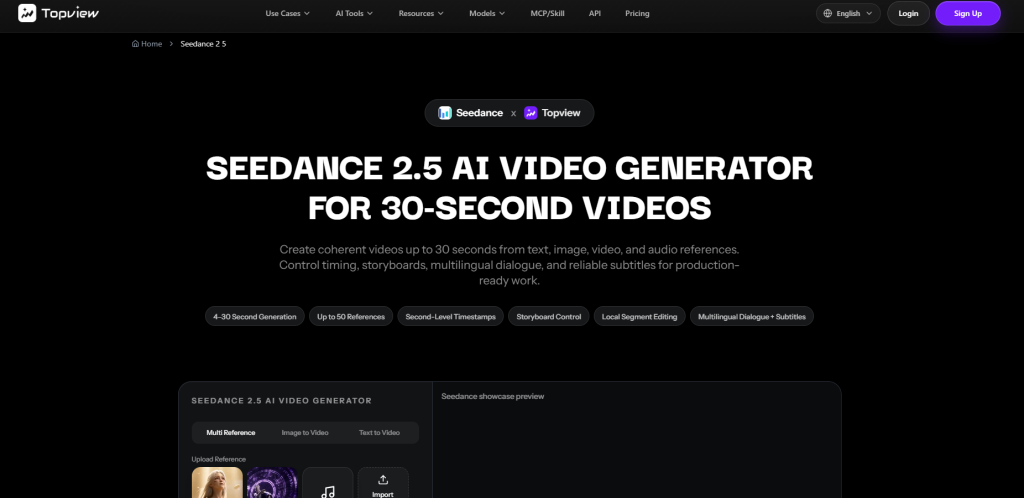
2. Seedance 2.5 – Best Long Beat Production Model
If Gemini Omni Flash dominates short productions, Seedance 2.5 dominates long-form generation.
This model extends video generation to approximately 30 seconds while supporting an impressive collection of references. You can build much more complex scenes without constantly stitching together separate clips.
One feature I particularly appreciate is timestamp editing. Rather than regenerating an entire scene because of one mistake, you can repair a specific moment.
Seedance 2.5 stands out because of:
- Longer Storytelling: 30-second clips allow complete narrative sequences instead of isolated moments.
- Extensive Reference Support: The platform supports dozens of image references alongside multiple video and audio references, making consistency much easier.
- Targeted Scene Repair: Timestamp-based editing saves both time and computing resources during production.
For creators producing advertisements or branded stories, this is one of the strongest options currently available.
3. MiniMax H3 – Best Short Multimodal AV / Open Weight Contender
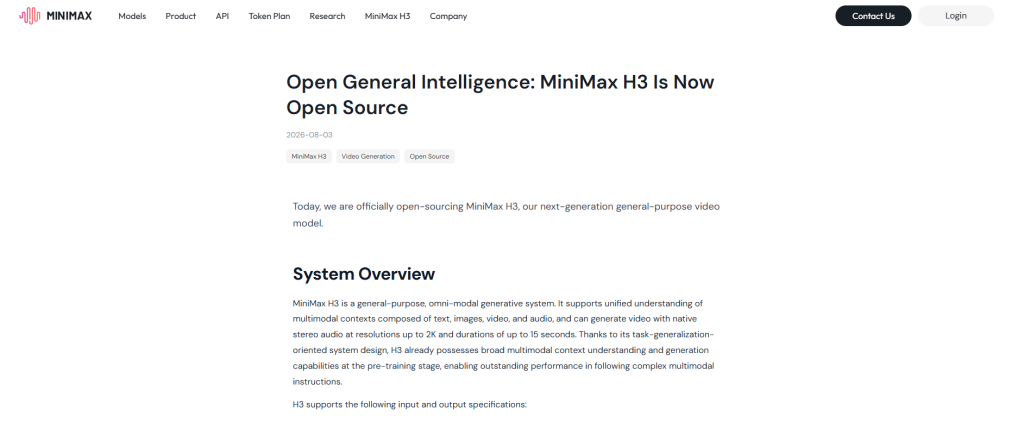
MiniMax H3 has earned a strong reputation for generating short commercial content with excellent audiovisual quality.
Although it generally focuses on shorter clips, it performs extremely well in creating videos for product demos, promotional videos, and character-driven advertising.
One of its biggest advantages is its open-weight direction, which makes it attractive for organizations that may eventually want more deployment flexibility.
MiniMax H3 works particularly well for:
- Product Advertisements: Its strengths align nicely with commercial storytelling.
- Character-Focused Content: The model handles short character scenes effectively.
- Future Deployment Flexibility: Its open weight approach makes it interesting for developers and larger production teams.
4. Wan 3.0 – Best Omni Reference Story Engine (Alibaba Line)
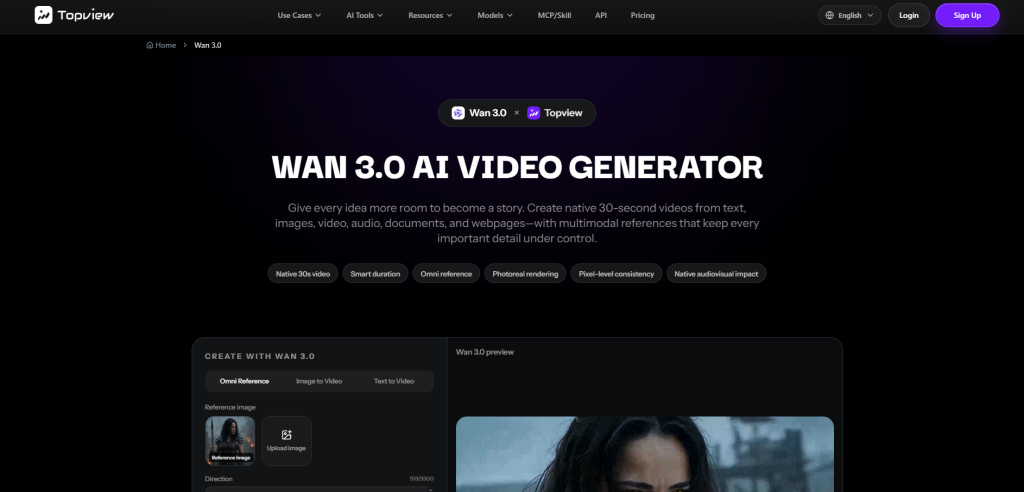
Wan 3.0 pushes beyond traditional prompt-based video generation.
Instead of relying solely on text prompts, it introduces broader reference capabilities that include documents and webpages. It makes it useful for projects that begin with detailed creative briefs or existing production materials.
Wan 3.0 also supports approximately 30-second videos, which places it alongside Seedance when longer storytelling matters.
Its biggest strengths include:
- Document Based Creative Workflows: Production teams can build videos from much richer project documentation.
- Smart Duration Management: The model intelligently adapts clip length depending on the scene.
- Strong Reference Consistency: Characters, products, and environments remain more consistent throughout longer sequences.
5. Kling 3.0 – Best Motion / Multi Shot Value Workhorse
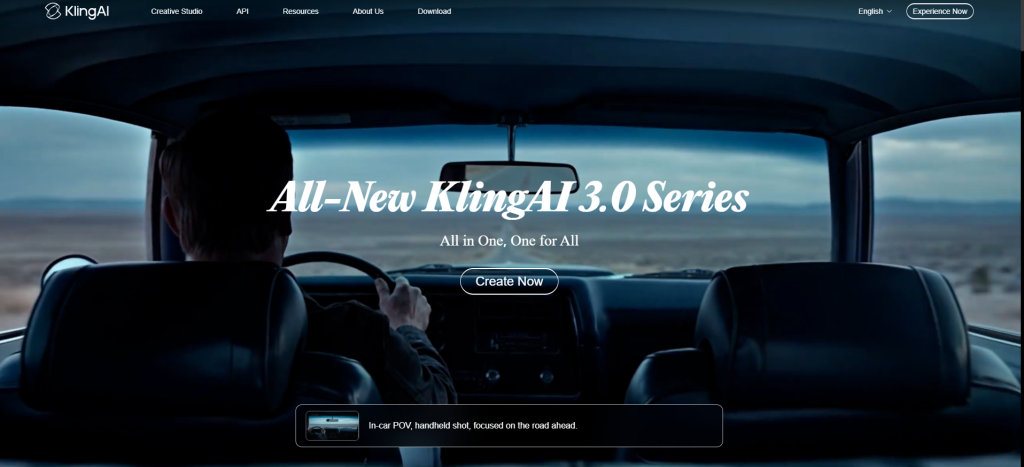
Some AI models create beautiful individual frames but struggle with movement.
Kling 3.0 continues to stand out because its camera motion feels energetic and natural. Fast-moving scenes, cinematic transitions, and action sequences remain its biggest strengths.
This makes Kling particularly useful for:
- Action Sequences: The model produces dynamic movement that feels less artificial.
- Social Media Videos: Fast paced short videos benefit from Kling’s energetic style.
- High Volume Production: Many creators appreciate the balance between quality and production efficiency.
If your project depends on motion rather than static beauty shots, Kling deserves serious consideration.
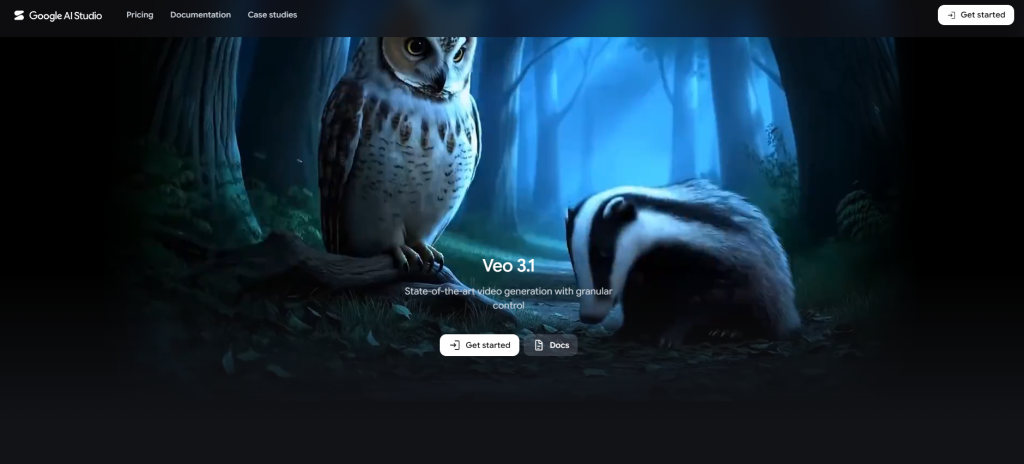
6. Veo 3.2 (Veo 3.1 Family) – Best Photoreal Premium Look
For agencies working with premium brands, Veo continues to be one of the safest choices.
Its photorealistic rendering, synchronized audio, and strong lip synchronization make it suitable for professional marketing campaigns where visual quality is the highest priority.
Veo performs especially well for:
- Luxury Product Videos: High end products benefit from realistic lighting and textures.
- Brand Campaigns: The overall visual polish helps create premium commercial content.
- Cinematic Storytelling: Its realistic appearance makes it suitable for film style sequences.
The tradeoff is that other models may offer stronger value. So, if your priority is speed or cost efficiency, you should explore my guide on Veo alternatives, where I have listed the top options you can use instead of this model.
7. Happy Horse 1.1 – Best Specialist for Short Drama & E-commerce Motion
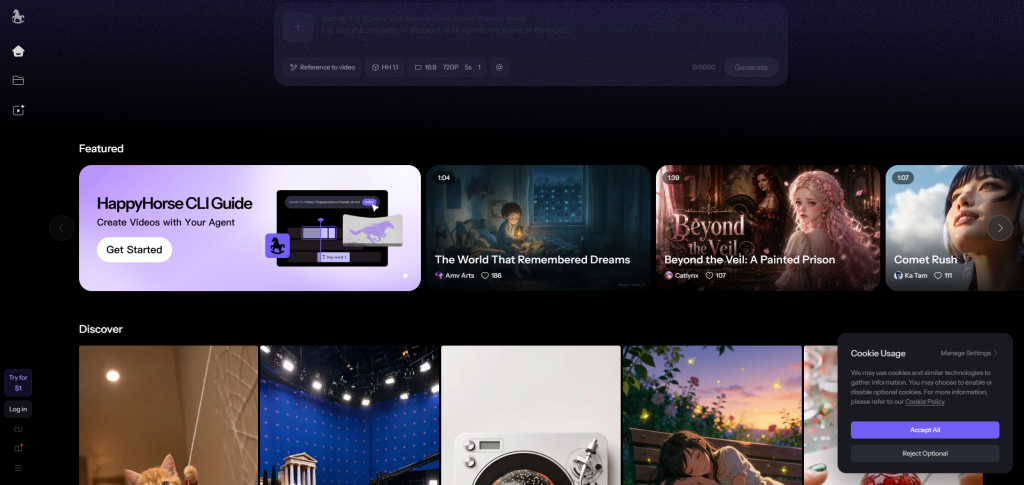
Happy Horse 1.1 may not lead public leaderboards, but it fills an important niche.
It performs particularly well in short dramas, ecommerce advertisements, and product-focused storytelling where subject consistency matters.
Recent improvements have strengthened motion quality while making recurring characters appear more consistent across scenes.
It is worth considering when your projects involve:
- Ecommerce Promotions: Product demonstrations benefit from its consistency improvements.
- Short Dramatic Content: Narrative scenes remain one of its strongest areas.
- Brand-Focused Animation: The model handles repeated visual elements effectively.
WebTech Solutions' Suggestion: FLUX 3 Is Also Worth Considering
Although it does not appear in the main rankings, FLUX 3 deserves recognition.
It occupies an interesting middle ground between shorter models such as Gemini Omni Flash and longer platforms like Seedance or Wan.
With support for native audio and videos approaching twenty seconds, it offers another capable option for creators who prefer its visual style.
<strong>Which AI Video Model Should You Choose?</strong>
Choosing the right AI video model becomes much easier once you identify your production goals.
| Your Goal | Recommended AI Video Model |
|---|---|
| I want the highest overall quality with easy editing | Gemini Omni Flash |
| I need to create 30 second stories with lots of reference images and videos | Seedance 2.5 |
| I create short product ads and commercial videos | MiniMax H3 |
| I need to generate videos using documents, webpages, and multiple references | Wan 3.0 |
| I want cinematic camera movement and action scenes | Kling 3.0 |
| I need premium photorealistic visuals for brands or films | Veo 3.2 |
| I create ecommerce ads or short drama content | Happy Horse 1.1 |
| I need a balanced model for medium length multimodal videos | FLUX 3 |
What the Best Production Teams Actually Do
One of the biggest misconceptions about AI video generation is that professionals rely on a single model.
In reality, most experienced creators combine multiple models throughout the same project.
A typical workflow often looks something like this.
- First, they generate the main narrative using Seedance 2.5 or Wan 3.0 because those models support longer scenes.
- Next, they create premium hero shots with Gemini Omni Flash or Veo for maximum visual quality.
- After that, they generate action sequences using Kling 3.0 to add stronger camera movement.
- Finally, they build short commercial inserts with MiniMax H3 before assembling everything into the final edit.
This approach consistently produces better results than relying on one model for every task.
Common Mistakes to Avoid When Comparing AI Video Models
Many comparison articles make the evaluation process more confusing than it needs to be.
One common mistake is assuming that whichever model sits at the top of a leaderboard is automatically the best for every project.
Another mistake is trusting technical claims without checking official documentation. Features such as higher resolution, open weight availability, or extended video length should always be verified through official model information.
It is also important to think about audio during planning. Since many modern AI video models generate synchronized sound, creators should intentionally decide whether they want native audio instead of treating it as an afterthought.
Finally, avoid building long term production pipelines around platforms with uncertain availability or changing support policies. Stability matters just as much as benchmark performance.
Final Thoughts
There is no single AI video model that dominates every production workflow in 2026. Instead, the strongest creators choose the right tool for each stage of production.
- Gemini Omni Flash remains an outstanding all-around option for short multimodal generation and editing.
- Seedance 2.5 leads longer narrative production.
- MiniMax H3 offers excellent commercial capabilities.
- Wan 3.0 expands creative control with document driven workflows.
- Kling 3.0 excels in cinematic motion.
- Veo 3.2 delivers premium realism.
- Happy Horse 1.1 continues to serve ecommerce and dramatic content creators well.
Rather than chasing one perfect model, I recommend building a flexible toolkit that allows you to match the right AI video model to every creative challenge.
People Also Ask
Which AI video model is the best overall in 2026?
Gemini Omni Flash is the best overall AI video model thanks to its high quality output, multimodal support, and natural language editing capabilities.
Which AI video model is best for creating longer videos?
Seedance 2.5 is the top choice for longer videos because it supports clips of up to around 30 seconds with advanced reference and editing controls.
Which AI video model creates the most realistic videos?
Veo 3.2 is the best option for photorealistic videos with premium visuals, realistic physics, and native audio.
Which AI video model is best for commercials and product ads?
MiniMax H3 is ideal for short commercial videos, product advertisements, and multimodal marketing content.
Should I use one AI video model for every project?
No, the best results usually come from combining multiple AI video models based on your project’s length, style, and production requirements.
Need custom app with amazing features?
Get a Quote