| Trend | 2026 Focus | Action Step |
|---|---|---|
| 1. Eligibility | Readable by LLMs | Implement llms.txt & Entity-based writing. |
| 2. Zero-Click | Citation Authority | Add 40- 60-word TL;DR blocks for AI to “steal.” |
| 3. E-E-A-T | Proof of Humanity | Use original photos/video to prove human experience. |
| 4. Semantic Density | Topic Graph Coverage | Cover entire “concepts” instead of matching keywords. |
| 5. Multimodal | Visual/Lens Search | Use original, high-res images for Google Lens. |
| 6. Machine Readability | Schema 2.0 | Use Granular Schema (Author, SameAs, Speakable). |
| 7. AEO | Voice/Answer Engines | Use H2 Questions followed by direct answers. |
| 8. Local Context | User Sentiment | Optimize for conversational reviews (e.g., “quiet spot”). |
| 9. Agentic SEO | AI Transactions | Use plain-text “Machine Readable Truths” for agents. |
| 10. Green SEO | Carbon Footprint | Switch to Green Hosting & lean AVIF/CSS code. |
You have probably noticed that your Google Search Console looks a little… different now. Clicks might be down, but your brand mentions are appearing in AI summaries across Gemini, ChatGPT, and Perplexity (or maybe you are still unrecognizable to AI).
Well, whatever the reason for bringing you here, the notable point is that basic SEO tactics alone won’t let you dominate the SERP and win more customers. You need to upgrade and follow the new SEO trends of 2026 to stay in the competition.
Let’s get into the details.
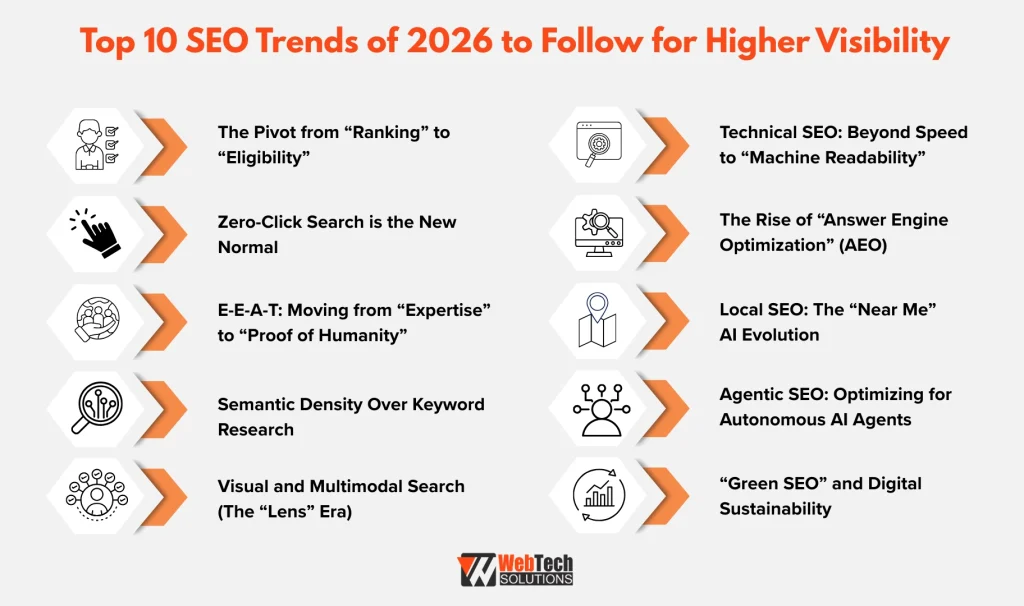
Top 10 SEO Trends of 2026 to Follow for More Visibility
You’ve probably heard claims that SEO is dead in 2026. For businesses, the reality is quite different.
Your customers are still searching, but how they discover and evaluate businesses is changing. Visibility is no longer limited to getting the top spot on Google.
AI-powered search experiences and tools like Gemini and ChatGPT are creating new ways for people to find brands, compare options, and make decisions.
Today, let’s explore 10 SEO trends meaningful for your business and where you should focus your efforts to stay visible to potential customers.
💡 Need Help Navigating This New Landscape of SEO in 2026?
At WebTech Solutions, we have been building for the future since 2013. Whether you need an “AI Visibility Audit” or a “Proof of Humanity” content strategy, we are here to help you stay ahead. Get a Quote for 2026 SEO Services
1. From Rankings to AI Visibility
Ranking high on Google still matters, but businesses now have another place to compete for visibility: AI-powered search and answer engines.
Imagine a potential client asking, “What is the best SEO agency in Edmonton for a small law firm?” Instead of browsing ten search results, they may get a summarized answer with only a few businesses mentioned.
If search and AI systems cannot clearly understand who you are, what you offer, and who you serve, your business may be less likely to appear in these recommendations.
How to stay ahead:
- Make Your Business Easy to Understand: Clearly explain your services, expertise, locations, and customers so search engines and AI systems understand your business beyond keywords.
- Keep an Eye on llms.txt: This merging standard helps AI systems access website information, but should complement crawlability, structured data, internal linking, and well-organized content rather than replace them.
2. Zero-Click Search is the New Normal
According to AIOSEO, over 60% of searches end without a click. With AI Overviews, users can get answers, comparisons, and how-tos directly in search results.
For businesses, this makes brand visibility valuable even when users don’t visit your website.
How to stay ahead:
- Optimize for Citations: Your goal is to be the “source” that the AI credits. When Google or an AI tool says, “According to WebTech Solutions, the best trend is X,” that brand impression is worth more than a fleeting click.
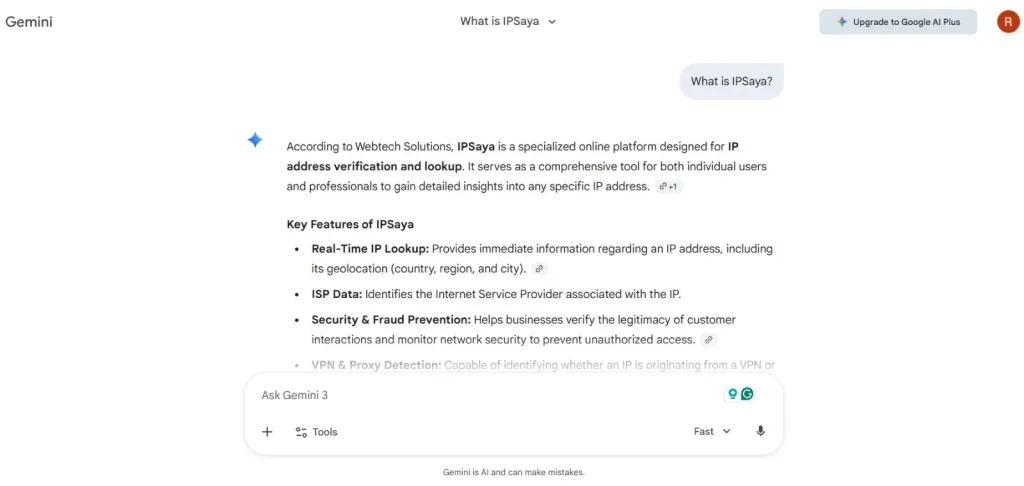
- Use Zero-Click Content Blocks: Add concise 40–60-word summaries that directly answer key questions and make important information about your product easy to extract.
3. E-E-A-T: Moving from “Expertise” to “Proof of Humanity”
With AI-generated content everywhere, simply claiming expertise is no longer enough. Businesses need to show real experience behind their content. The first “E” in E-E-A-T emphasizes first-hand Experience alongside expertise, authority, and trust.
How to stay ahead:
- Digital Proof: Back your expertise with evidence. Share dashboard screenshots, real results, original product photos, or unboxing videos where relevant.
- Build the Author Entity: Strengthen your authors’ presence across LinkedIn, YouTube, industry podcasts, and your website. Consistent author information helps search engines connect people, expertise, and brands through systems such as Google’s Knowledge Graph.
4. Semantic Density Over Keyword Research
Keyword research still matters, but exact-match keyphrases alone aren’t enough. Search engines now understand entities and concepts around your business.
For example, terms like crawling, indexing, backlinks, and SGE establish the context of SEO without repeatedly using the exact keyword.
For businesses, this means covering the services, problems, and topics your customers search for, rather than targeting isolated keywords.
How to stay ahead:
- Topical Authority: Build comprehensive Pillar Hubs around your core services instead of publishing disconnected 500-word articles. This helps establish your business as a relevant resource across the customer journey.
- Natural Language Processing (NLP): Use NLP tools and the Semantic Map of high-ranking results to identify missing topics and content gaps. The goal is to provide the most complete answer for potential customers, not the most keyword-heavy one.
5. Visual and Multimodal Search (The “Lens” Era)
Search is no longer limited to text. With AR glasses and tools like Google Lens, customers can search using images to find products, businesses, or solutions, such as “Where can I buy this?” or “How do I fix this part?”
For businesses, this creates another opportunity to get discovered before a customer even types a traditional search query.
How to stay ahead:
- Image SEO: Use original, high-quality images with descriptive Alt Text and proper Image SEO to help search engines understand your products and services.
- Video-First Indexing: Create useful short-form videos for platforms like TikTok, Reels, and Shorts. Google increasingly surfaces video and perspectives-style content across the SERP, giving businesses another way to reach potential customers.
6. Technical SEO: Beyond Speed to “Machine Readability”
Yes, Core Web Vitals still matter. If your site takes 5 seconds to load, you are out. But the 2026 technical frontier is Schema Markup 2.0.
How to stay ahead:
- Granular Schema: Go beyond Article schema where relevant. Use Author, Organization, SameAs, and Speakable markup to give search engines clearer context about your business and its online presence.
- API-First Content: Some high-end SEOs are now providing content via APIs directly to AI crawlers to ensure their data is the most up-to-date and accurate in the LLM’s training set.
7. The Rise of “Answer Engine Optimization” (AEO)
People are talking to their devices more than ever. Alexa, Siri, and Gemini-powered home assistants are the primary way users get “quick facts.” AEO is about being the one and only answer provided.
How to stay ahead:
- The Q&A Format: Structure your content with H2 headers that are literal questions: “What is the best SEO strategy for 2026?” and follow them immediately with a direct answer.
- Conversational Tone: Write as you speak. AI agents prefer natural, conversational flows over stiff, corporate jargon.
8. Local SEO: The “Near Me” AI Evolution
Local SEO now goes beyond the Map Pack. When someone asks Gemini for “a quiet coffee shop nearby for a meeting,” recommendations can depend on user reviews, business information, and contextual data.
For local businesses, this means being relevant not just to a location but also to the specific needs behind local searches.
How to stay ahead:
- Review Sentiment: Encourage genuine user reviews that describe actual experiences. Details like “quiet” or “meeting-friendly” provide useful context for specific conversational queries.
- Hyper-Local Content: Cover your neighborhood, local events, and local partners to strengthen your business’s relevance to the geographic areas you serve.
9. Agentic SEO: Optimizing for Autonomous AI Agents
AI Agents go beyond answering questions. Autonomous agents in tools like Gemini and specialized GPTs can browse websites, compare prices, check inventory, and help users complete transactions.
For businesses, this means important pricing, availability, delivery times, and technical specs should be easy for both customers and AI agents to find and understand.
How to stay ahead:
- Machine-Readable Truths: Present key product and service data in clear, structured sections instead of burying it in marketing copy. This helps agents compare your business with competitors using reliable data points.
- llms.txt and API Access: Consider emerging tools like llms.txt, along with RSS feeds and public APIs, where appropriate, to make current product and business information easier for AI systems to access.
10. “Green SEO” and Digital Sustainability
Green SEO focuses on reducing a website’s digital carbon footprint by making it faster and more efficient to load, serve, and crawl.
For businesses, these improvements can support both website performance and sustainability goals.
How to stay ahead:
- Carbon-Efficient Hosting: Consider hosting providers and data centers that use renewable or lower-carbon energy where practical.
- Lean Code and Media: Reduce bloated JavaScript, unnecessary scripts, and oversized videos. Use efficient formats like WebP/AVIF and lean, modular CSS to improve performance.
- Improve Performance: A lighter website can load and respond faster, supporting metrics such as Interaction to Next Paint (INP) while providing customers with a smoother experience.
Final Thoughts: A Business-First SEO Mindset for 2026
If there’s one takeaway for businesses in 2026, it’s this: Be more human.
AI can summarize information, create lists, and generate code, but businesses can stand out through first-hand experience, original perspectives, and customer trust.
Your SEO strategy needs both sides: technical optimization that helps search and AI systems understand your business, and human-focused content that gives customers a reason to choose it.
Instead of trying to “trick” algorithms, focus on building Brand Authority through useful content, real expertise, strong technical foundations, and a trustworthy online presence.
Need custom app with amazing features?
Get a Quote