
Still looking at SEO through the lens of 2024? No doubt, you are trying to win a Formula 1 race with a horse and carriage.
In 2026, the term “long-tail keyword” has evolved. It’s no longer just a string of four or five words you find in a research tool. Today, long-tails are conversational prompts, entity-based queries, and specific intent markers. They are the only way for brands to bypass the “AI Gatekeepers” and get cited in the coveted AI Overviews (AIO).
So, grab a coffee. We are going deep into how you actually find and use these long-tail keywords to dominate the 2026 search landscape.
What are Long-Tail Keywords?
Long-tail keywords are highly specific, conversational queries that signal a clear, complex users’ search intent.
- In the old days, “SEO agency” was a head term, and “SEO agency for lawyers in Chicago” was a long-tail keyword.
- In 2026, the long-tail looks more like: “Why is my website not ranking despite publishing content and following white hat SEO techniques?”
Now, Google and other generative engines, like Gemini, ChatGPT, and Perplexity, don’t care how many words are in the string. They care about Specificity. A long-tail keyword today is a query that reflects a complex, multi-layered intent.
The Shift from Strings to Entities
Modern SEO is built on Entities, such as people, places, things, and concepts. A 2026 long-tail query is usually a request for a relationship between entities.
- 2024 Query: “Best CRM for small business.”
- 2026 Query: “Which CRM integrates with Slack and offers automated lead scoring for a 10-person remote marketing agency?”
The second query is a “long-tail” not because it is long, but because it is uniquely specific. It tells the search engine exactly who the user is and what they need to achieve. If you aren’t optimizing for that specific problem, you aren’t doing SEO. You are just writing for the void.
How to Find Long-Tail Keywords in 2026?
Traditional tools for keyword research, like Moz, Ahrefs, Semrush, Ubersuggest, SpyFu, and others, are still useful for data, but they are “lagging indicators.” They tell you what happened last month. To win in 2026, you need “leading indicators.”
A. The “Prompt-Reverse” Technique
The best place to find what people are asking is to go where they are asking it: AI Chatbots. Go to a generative engine and use this prompt:
- “What are the top 15 hyper-specific questions people ask when they are frustrated with [Your Topic] but can’t find a direct answer on Google?”
The AI will spit out a list of “Intent Gaps.” These are your long-tail keywords. These are queries that are high-intent but often have low-quality content serving them.
B. Mining the “People Also Ask” (PAA) Clusters
PAA boxes are more important than the organic #1 spot in 2026. They are the search engine’s way of saying, “Here is exactly how we have mapped this topic.”
- Search your main “Head Term.”
- Click and expand 10+ PAA questions.
- Notice how the questions evolve from “What is…” to “How do I fix [Specific Problem] in [Specific Context]?”
Those specific context questions are your long-tail goldmine.
C. Search Console “Hidden” Queries
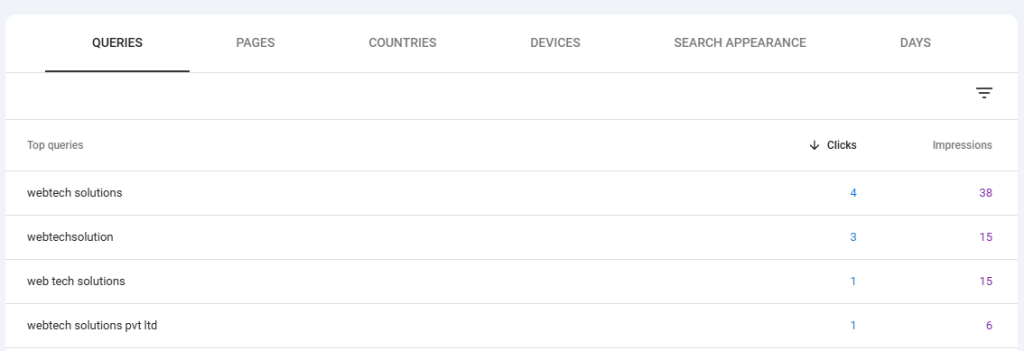
Your own data is your best weapon. Look at your Google Search Console (GSC) for queries with high impressions but a click-through rate (CTR) of less than 1%.
Often, these are long, rambling questions where your site is “kind of” relevant, but you haven’t provided a direct answer. When you create a dedicated section or article for that specific “hidden” query, you can skyrocket your relevance for that entity.
How to Use the Long Tail Keywords?
To use long-tail keywords for SEO in 2026, you must pivot from “keyword matching” to “intent fulfillment” by identifying complex, conversational queries through AI tools and user-generated content.
Finding the keyword is only 20% of the battle. In 2026, how you create content structure is what determines if you get cited by the AI or buried on page two.
Success requires structuring these keywords into “nuggetized” answers, deploying advanced Schema markup, and building entity-based content clusters that satisfy both human users and AI generative engines (GEO).
1. The Inverted Pyramid 2.0
In 2026, we use a structure I call Nuggetization. You cannot bury the answer at the bottom of a 2,000-word article. If a user asks a long-tail question, you must answer it in the first two lines of the relevant section.
The 2026 Section Formula:
- H2 Header: The Long-Tail Question (e.g., “How do I track SEO ROI for a B2B SaaS?”)
- The Information Nugget: A bolded, 50-60 word direct answer. (This is what the AI scrapes for its overview).
- The Evidence: Data, charts, or expert insights that prove why that answer is correct.
- The Context: A deeper dive into the “How-to” for users who want to stick around and read.
2. Technical SEO for Long-Tails: Feeding the Bots
If you want your answer for long-tail query to rank, you have to speak the language of the machines. That language is Schema Markup. This element of Technical SEO ensures that your article is crawlable by the AI tools for citation.
Essential Schema for 2026:
- FAQ Schema: Every long-tail question should be wrapped in FAQ JSON-LD. This makes it incredibly easy for Answer Engines (AEO) to parse your content.
- Speakable Schema: With the rise of voice-activated search, telling the engine which parts of your article are “summary-ready” is crucial.
- Mentions & About Schema: Clearly define the entities you are talking about. If you are talking about “SEO Strategy,” link that entity to its corresponding Wikipedia or Wikidata entry in your code.
3. Win the “Information Gain” War
Google’s “Helpful Content” updates have evolved into a metric called Information Gain. If your article about long-tail keywords says the exact same thing as the 10 articles already on the front page, the AI has no reason to include you.
To win with long-tails in 2026, you must add unique value, such as:
- Proprietary Data: “We analyzed 500 sites and found that…”
- Case Studies: “Here is exactly how Company X used this specific long-tail to grow.”
- Contrarian Advice: “Everyone says X, but in 2026, the real answer is Y.”
AI can summarize existing facts. It cannot (yet) create original experience-based insights. That is your competitive advantage.
4. The Conversational Tone: Writing for Humans and AI
There is a common misconception that “writing for AI” means writing like a robot. It is actually the opposite. Modern Natural Language Processing (NLP) models are trained on how humans actually talk. In 2026, “Dry, Corporate-Speak” is a ranking killer. Using NLP terms in SEO is your main tactic here.
Why a Conversational Tone Wins:
- Voice Search Match: People ask their phones questions like they are talking to a friend. Your content should sound like that friend.
- Engagement Metrics: High “Dwell Time” and “Scroll Depth” are massive signals in 2026. If your writing is engaging and direct, people stay.
- AEO Alignment: Answer Engines prefer clear, active-voice sentences over passive, academic jargon.
5. The 2026 Content Cluster Blueprint
You can’t just target one long-tail keyword and expect to rank. You need to prove you are an authority on the entire entity. For this purpose, finding keyword clusters and creating content clusters is the best approach.
The Cluster Model:
- Pillar Content: A massive, high-level guide (e.g., “The Complete Guide to 2026 SEO Strategy”).
- Cluster Content: 10-15 smaller articles targeting hyper-specific long-tail keywords (e.g., “How to optimize for voice search on mobile,” “Using Schema for local SEO,” etc.).
- The Internal Link Web: Every cluster article must link back to the pillar, and the pillar must link to every cluster. This creates a “Topic Map” that tells the AI, “This site is a definitive source of truth for this subject.”
6. Measuring Success: It’s Not Just About Traffic
In a “Zero-Click” world, traditional metrics like “Clicks” can be misleading. In 2026, we look at:
- AIO Visibility: How often is your brand cited in the AI Overview?
- Brand Lift: Are people searching for your company name directly after seeing your “nuggets” in the search results?
- Assisted Conversions: Using multi-touch attribution to see how a long-tail blog post influenced a sale three weeks later.
Final Thoughts: Stop Searching, Start Answering
The era of “Keyword Hunting” is over. We are now in the era of Intent Mapping.
To find and use long-tail keywords in 2026, you have to stop thinking like a librarian and start thinking like a consultant. Your job isn’t to store information. It is to provide the best, most specific, and most accessible answer to a user’s problem.
If you focus on Specificity, Nuggetization, and Information Gain, you won’t just survive the 2026 SEO shifts. You will lead them.
Need custom app with amazing features?
Get a Quote