For small and medium-sized businesses in Australia, tech isn’t optional anymore. It runs pretty much everything, every single day.
Whether it’s email, cloud apps, cybersecurity, accounting platforms, customer databases, or communication systems, they all need to just work reliably. But keeping all that running? That gets tricky fast when you don’t have much IT help in-house.
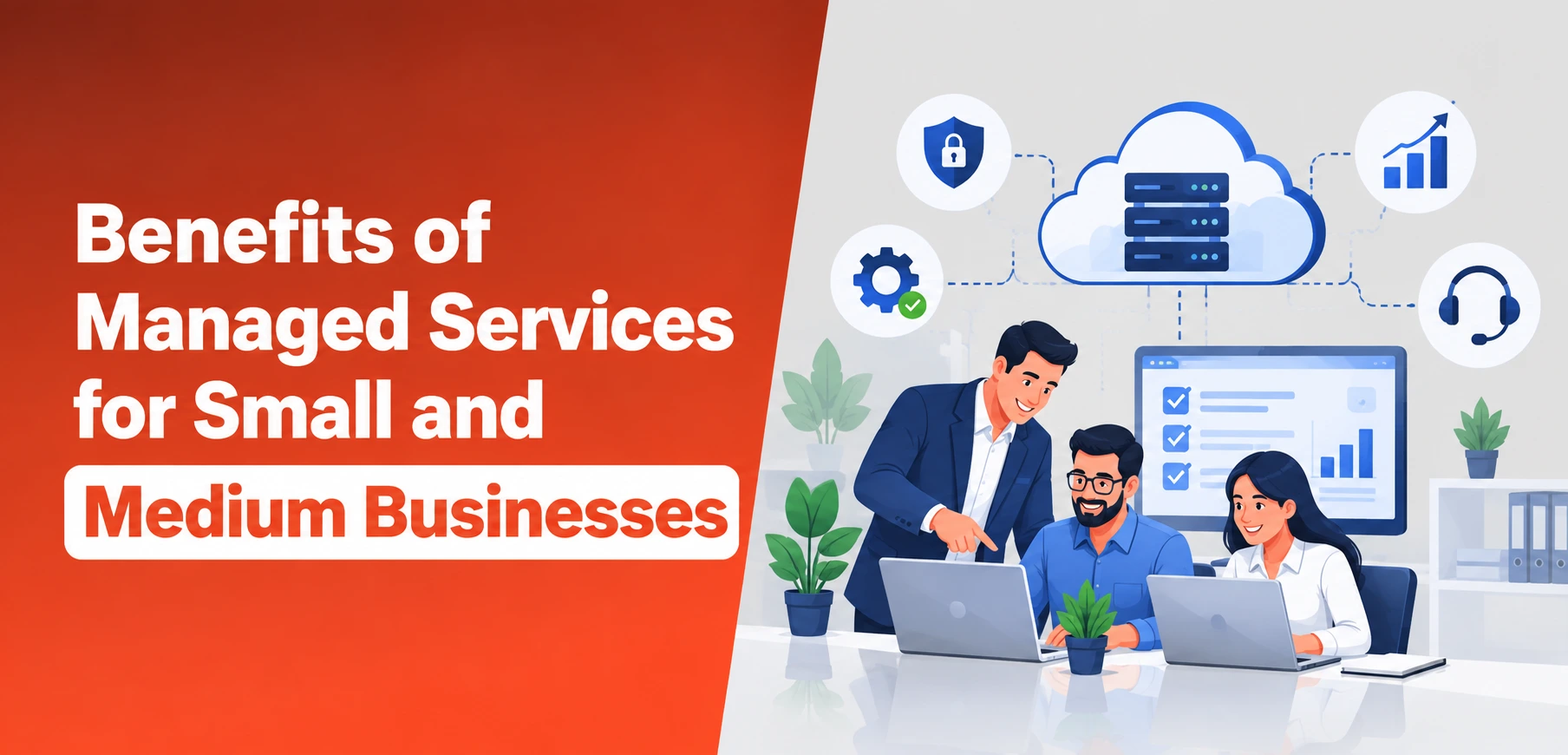
That’s where handing IT management over to a managed services provider (MSP) comes in. It’s one way SMEs can get ongoing tech support without building a big in-house IT department from scratch.
A managed services arrangement can cover a lot of ground, such as monitoring, maintenance, cybersecurity, troubleshooting, backups, and strategic IT planning. In this guide, we will explore its benefits and the shifts it can bring to your business model in this competitive landscape.
7 Benefits of Managed Services for Small to Medium Businesses
So what’s actually in it for you? Here are seven key benefits SMEs can get from managed services.
1. More Predictable IT Costs
Tech problems love to show up out of nowhere. And they usually bring surprise bills with them. Common issues includes:
- Server crashes
- Security incidents
- Urgent software issues
Suddenly you need a specialist, fast. And trying to forecast your IT spending? Good luck.
Managed services usually run on an agreed service arrangement. That makes your routine IT costs a lot more predictable. So instead of forking out separately for every little issue, you might have an ongoing service. One that covers set support and management work.
Predictable costs make budgeting way easier, especially for smaller businesses that need to keep a close eye on cash flow. It also lets owners treat IT as a planned operating expense, not something that only gets attention when it breaks.
2. Access to a Wider Range of Expertise
A small business might not need specialists in every area of tech. Or might not be able to afford them. Fair enough. But networking, cloud platforms, cybersecurity, data backup, and device management? They all need different skills.
An MSP can give you access to people who know their stuff across a bunch of technical areas. That’s really handy when you’re rolling out a new cloud platform, growing your team, or dealing with a problem that needs someone who really knows what they’re doing.
It also means you’re not leaning on one employee to hold all the IT knowledge. Because what happens when that person’s away? Important tech info and support processes don’t just vanish with them.
3. Stronger Cybersecurity Practices
Cybersecurity isn’t a one-and-done job. It never stops. Australian SMEs can run into all kinds of risks, such as:
- Phishing
- Stolen credentials
- Malware
- Ransomware
- Unauthorised access
Managed IT services can include a bunch of security measures, like software updates, endpoint protection, access controls, monitoring, and backup management. And regular maintenance really matters here. Why? Because outdated software and badly set-up systems can open up vulnerabilities you could’ve easily avoided.
Security isn’t just about tech, though. It’s about people and processes too. Staff need the right access permissions, strong authentication habits, and a decent awareness of common threats. An external IT provider can help you set up those controls. And keep them in shape as your systems change.
4. Less Downtime
When tech fails, it hits customers, employees, and revenue. If staff can’t get into important apps, files or communication systems, even a smallish tech glitch can throw normal operations off track.
One of the practical benefits of managed services is proactive monitoring and maintenance. So instead of waiting around for employees to report every problem, IT systems can be watched for potential issues. The ones that might need attention.
Regular updates, maintenance, and equipment checks can also catch problems early, before they turn into major disruptions. Now, no IT setup can promise zero downtime. But proactive management can cut down the chances and the impact of certain avoidable failures.
5. More Time for Employees to Focus on the Business
Employees often burn a lot of valuable time sorting out tech problems that aren’t even their job. Someone might lose hours troubleshooting a computer, setting up software, or trying to fix an access issue. Sound familiar?
When routine IT stuff gets handled externally:
- Employees can actually get on with their real roles.
- Sales teams can focus on customers.
- Finance staff can stick to financial processes.
- Managers can put more attention into running the business.
That doesn’t mean employees should have zero to do with IT. Not at all. It just means the technical side gets handled by people whose job is actually managing technology.
6. Better Support for Business Growth
As a business grows, so do its technology needs. Opening up another location, or hiring new people? You may require additional user accounts, devices, cloud storage, apps or security controls.
An MSP can help you plan for those changes. Instead of treating every bit of growth like a random, one-off IT headache. Good planning makes it easier to figure out which systems need more capacity. And which tech might not be the right fit anymore.
For SMEs, that kind of scalability can be a real lifesaver, because tech needs can shift pretty quickly as the business develops.
7. More Structured IT Planning
Small businesses sometimes handle tech on the fly. Something breaks. Someone fixes it. Everyone moves on. That might work for a while. But it can leave important stuff totally overlooked, like testing backups, managing the software lifecycle, and disaster recovery.
A managed services approach provides a more structured way to review your IT systems. Regular check-ins can help you spot outdated equipment, software you don’t need, security gaps, and what tech you’ll need down the track.
This provides a much stronger correlation between your technology and your business goals. IT planning can consider continuity, security, productivity and future growth, rather than simply keeping computers and networks ticking over.
Final Thoughts: Make the Right Decision for an SME
Outsourcing IT isn’t automatically the right call for every business. SMEs should think about:
- What support they actually need.
- Which systems are business-critical.
- And what responsibilities should stay in-house.
Service agreements should also spell things out clearly. Response times, what services are included, security responsibilities, how data’s handled, and any extra charges.
For a lot of Australian SMEs, the real value of managed IT isn’t just having someone to call when things go wrong. It’s the whole package of predictable planning, technical expertise, proactive maintenance and ongoing support. And the best part is that they are all working together.
When tech’s managed properly, business owners and employees spend less time dealing with avoidable IT headaches. And more time on the work that actually keeps the organisation running and growing.
Need custom app with amazing features?
Get a Quote