I remember back in 2020 when we thought SEO was getting complicated because of a few algorithm updates. Fast forward to 2026 and the landscape has shifted into something entirely different.
We are no longer just fighting for blue links on a page but rather competing for space in AI overviews, voice search results, and highly personalized user feeds. If you are running a business in the United States today, you know that the digital market is noisier than ever.
Staying ahead requires more than just checking your rankings once a month. It requires deep thinking into specific, actionable data points. Here is I am going to provide you with the list of 10 SEO performance KPIs you should monitor for your US-based business
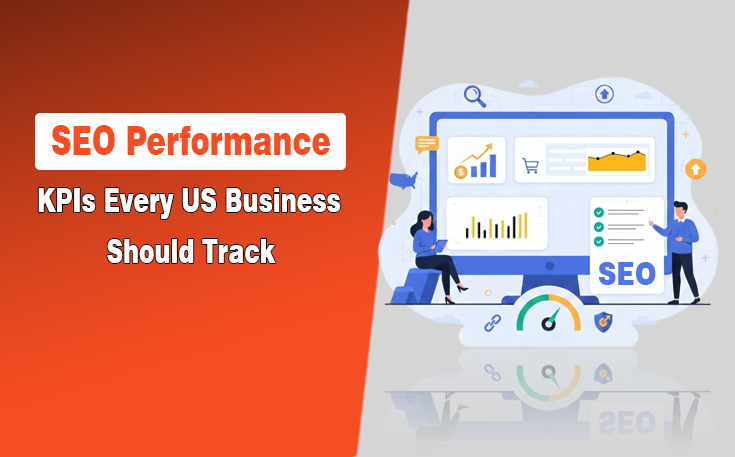
📊 SEO Performance KPIs Every US Business Should Track
- Visibility and Brand Authority KPIs (Share of Voice in AI Overviews, Branded vs Non Branded Traffic Ratio)
- User Engagement and Experience KPIs (Core Web Vitals and Page Experience, Average Session Duration by Source)
- Conversion and Revenue Focused KPIs (Organic Conversion Rate, Customer Acquisition Cost from Organic Search, Revenue per Organic Visit)
- Technical Health and Authority KPIs (Crawl Error Rate and Indexation Status, Referring Domain Growth and Quality, Keyword Ranking Distribution)
Why Tracking the Right Metrics SEO Matters in 2026?
In the current era of search engine optimization, data is abundant, but meaningful insights are rare. If you are tracking the wrong things, you are essentially steering your ship by looking at the wake behind you instead of the horizon ahead.
For US businesses, the competition is global, yet the delivery is often hyper-local. It means your KPIs must reflect both your broad reach and your specific impact on the bottom line. I have seen too many companies get lost in vanity metrics that look great in a board meeting but do nothing for the bank account.
1. Moving Beyond Vanity Metrics
We have all been there. You see a massive spike in impressions and feel like a rockstar. But then you look at your sales and realize they have not budged.
In 2026, vanity metrics like raw page views are becoming less relevant. I want you to focus on metrics that indicate real human interest and intent. We are looking for data that tells a story about how users interact with your brand across different platforms and devices.
2. The Integration of AI and Search
AI is no longer a buzzword because it is the engine behind almost every search query today.
When I talk about SEO now, I am also talking about AIO or AI Optimization. Your KPIs need to reflect how often your brand is being cited as a source by large language models. This shift requires a mental pivot from just counting clicks to measuring brand authority and presence within generated answers.
10 SEO Performance KPIs Every US Business Should Track in 2026
In the under section, I have explained the 10 classic SEO performance KPIs you should track while running your business in the United States. Also, these will be helpful when you have handed the SEO work of your website to an SEO agency in the USA, so you can determine the progress.
1. Share of Voice in AI Overviews
One of the most critical metrics you need to track today is how often your brand appears in AI generated summaries.
Since these summaries often sit at the very top of the search results page, they capture the lion’s share of attention. You need to know if the AI is using your data to answer user questions.
If your share of voice is high, you are established as a topical authority. If it is low, your content might be too thin or lack the structured data needed for AI to digest it properly.
2. Branded vs Non Branded Traffic Ratio
I always keep a close eye on the balance between people searching for your specific name and people searching for a general solution.
- Branded traffic is a sign of a healthy, recognizable brand.
- Non branded traffic shows that your SEO strategy is successfully capturing new customers who did not know you existed yet.
In 2026, a healthy US business should see a steady growth in non branded discovery while maintaining a loyal base of branded searchers.
3. Core Web Vitals and Page Experience
We have been talking about page speed for years, but in 2026, the technical SEO requirements are even more stringent.
Users expect instant gratification. If your site takes more than a second to be fully interactive, you are losing money. I recommend tracking your interaction to next paint scores closely. This tells you exactly how responsive your site feels to a human being.
A seamless experience is the baseline for keeping your visitors engaged long enough to convert.
4. Average Session Duration by Source
It is not enough to know that people visited your site. You should know how long they stayed and what they did.
When you break this down by traffic source, you can see which platforms are sending you the most qualified leads. If users coming from search stay three minutes while visitors from social media platforms stay thirty seconds, you know where to double down on your content efforts.
This metric is a direct reflection of how well your content matches the intent of the searcher.
5. Organic Conversion Rate
This is the holy grail of SEO metrics. It tells you what percentage of your organic visitors are taking a desired action, whether that is signing up for a newsletter or making a purchase.
You can use this KPI to identify which pages are your top performers and which ones are just taking up space. If you have a high traffic page with a zero percent conversion rate, it is time to rethink your call to action or your content strategy for that specific topic.
6. Customer Acquisition Cost from Organic Search
I love this metric because it proves the value of SEO compared to paid advertising.
To calculate this, you look at your total spend, including SEO tools and content creation, and divide it by the number of customers gained through organic channels. Usually, you will find that while SEO takes longer to spin up, the cost per customer is significantly lower over time.
It is a powerful number to show your stakeholders when you are asking for a budget increase.
7. Revenue per Organic Visit
This metric gives you a clear picture of the dollar value of your SEO traffic.
By assigning a value to each organic visit, you can forecast future revenue based on your growth trends. I find this especially useful for e-commerce businesses in the US. It helps you understand if you are attracting high value shoppers or just casual browsers who have no intention of spending money.
8. Crawl Error Rate and Indexation Status
If your pages are not in the index, they do not exist to the world. Therefore, you should regularly check for crawl errors or pages that have been excluded from search results with the help of Google Search Console.
In 2026, search engines are more selective about what they index to save on computing power. This means your content has to be high quality, and your site architecture has to be flawless. Monitoring your indexation status ensures that your hard work is actually being seen.
9. Referring Domain Growth and Quality
Backlinks still matter, but the focus has shifted entirely to quality over quantity.
You should track the growth of referring domains from authoritative, relevant sources. Getting a link from a major US news outlet or a top tier industry blog is worth a thousand links from low quality directories.
I always recommend looking for a steady upward trend in links from sites that actually have their own established audience and trust.
10. Keyword Ranking Distribution
Lastly, you should see how many keywords you have in the top three positions versus positions four through ten. In 2026, the drop off in clicks after the first three results is massive.
If you have a lot of keywords sitting on the bottom of page one, you are right on the edge of a huge traffic breakthrough. This KPI helps me prioritize which pages need an extra push to move into those high traffic spots.
Final Thoughts
The digital landscape for US businesses in 2026 is a blend of traditional search logic and futuristic AI integration.
When you focus on these 10 KPIs, you are moving away from guesswork and toward a data driven strategy that actually produces results. Remember that SEO is a marathon, not a sprint, and these metrics are your milestones along the way.
I encourage you to set up a dashboard that tracks these points monthly so you can spot trends before they become problems. If you stay consistent and keep your eyes on the right data, your growth will be inevitable.
Need custom app with amazing features?
Get a Quote