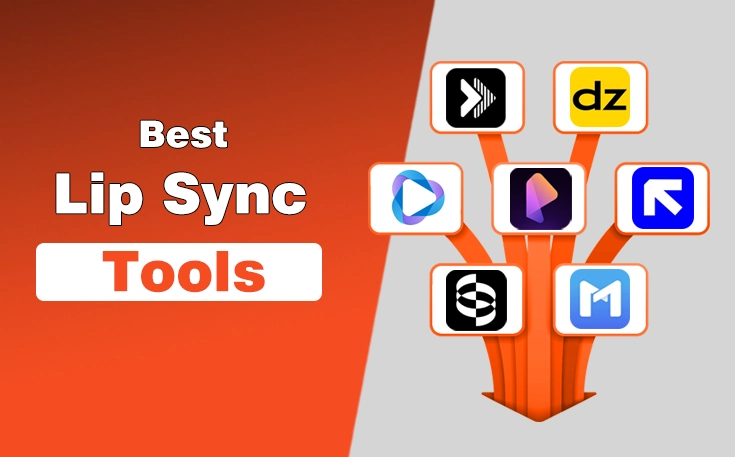
AI-powered lip sync technology has transformed video production, enabling creators and businesses to adapt content across languages with photorealistic accuracy. Modern lip sync tool platforms like Vozo AI use neural networks to map voice to mouth movement, and support multilingual dubbing for everything from corporate training to viral content.
These tools deliver realism through advanced facial animation and handle multiple speakers whilst maintaining natural expressions and gestures that make dubbed videos believable for global audiences. In this guide, I have provided insights into the 9 best Lip Sync tools that you can use for better results.
Key Takeaways
- AI-powered lip sync tools in 2025 enable lifelike, multilingual video content for creators and businesses.
- The best lip sync tools deliver realism, intuitive controls, wide language support, and compatibility across platforms.
- Vozo AI and Dzine AI lead for enterprise marketing and consistent brand content, offering photorealistic results and stable workflows.
- APIs and workflow integration are crucial for large-scale production, with tools like Sync.so favored by developers and studios.
- Affordable options like Gooey AI are ideal for hobbyists, while premium platforms such as Rask AI excel in advanced dubbing for global campaigns.
9 Best Lip Sync Tools of 2025 – The Ultimate Guide for Creators
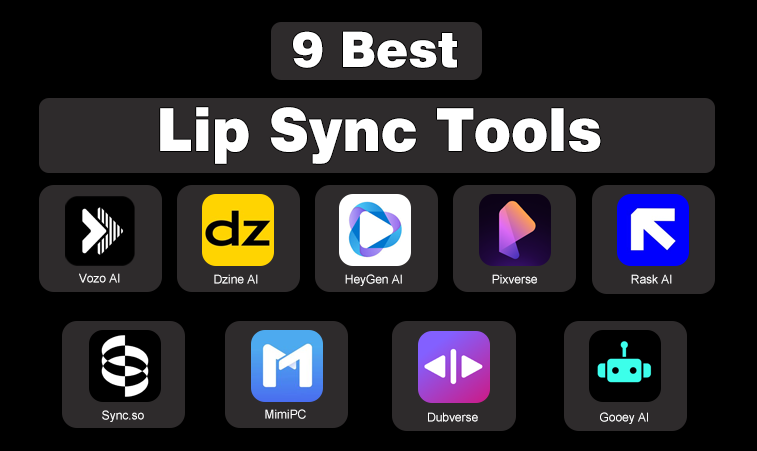
List of 9 Best Lip Sync Tools of 2025
- Vozo AI
- Dzine AI
- HeyGen AI
- Pixverse
- Rask AI
- Sync.so (Sync Labs API)
- ComfyUI-LatentSync (MimiPC)
- Dubverse
- Gooey AI
Brief overview of how AI and deep learning are changing video dubbing, content localization, and creative work in 2025
AI and deep learning have transformed video production and localization. Instead of labor‐intensive manual dubbing or animation, creators can now sync lips, voices, and even facial movements with just a click. Tools powered by neural networks map voice to mouth movement with striking realism, opening new paths for video translation, animated avatars, and viral content. Businesses are turning to these tools for everything from educational explainer videos to large-scale marketing in dozens of languages.
The demand for accurate, realistic, and multilingual lip sync, across animation, dubbing, corporate content, and viral media
Media consumers notice when dubbing and lipsync aren’t believable. As audiences grow more global, demand for accurate lip sync in corporate videos, animation, e-learning, and viral short-form media continues to rise. Brands want to speak every language, literally, without sacrificing visual quality or credibility. AI-powered lipsync tools ensure that the mouth matches the message, regardless of the language spoken.
Explanation of what defines an excellent lip sync tool: realism, ease of use, language support, platform compatibility, and creative controls.
An excellent lipsync tool must check several boxes:
- Realism: Mouth, face, and sometimes even body gestures should match the voice and emotion.
- Ease of use: Intuitive controls save hours and open up AI-driven tools to non-technical users.
- Language support: Tools that handle many languages, dialects, and accents are better suited to today’s creators.
- Platform compatibility: The ability to use the tool on desktop, web, and occasionally mobile is critical for busy teams.
- Creative controls: Fine-tune expressions, timing, and speaker settings to fit your brand and content style.
What are the Evaluation Criteria for the Best Lip Sync Tools?
- Realism and accuracy of lip sync (video and photo): The core function: does mouth movement precisely follow the audio, even in high-resolution or challenging footage? Realistic tools use neural networks trained on diverse speakers and emotions.
- Multilingual support and translation integration: Top tools translate audio and generate native-sounding lipsync in dozens (sometimes over a hundred) languages. This is essential for educators, marketers, or anyone seeking global reach.
- Handling of multiple faces and speakers: If your video has group conversations or panels, the best lip-sync software assigns and syncs audio to multiple people at once, no manual masking required.
- API availability and workflow/API integration: Developers and studios prioritize tools that offer APIs and plug-ins, enabling seamless automation as part of larger video editing or content production processes.
- Pricing, platform support, and accessibility (web, desktop, mobile): Consider budget, device preferences, and collaboration needs. Pricing models range from per-video credits to enterprise plans. Cloud-based tools let teams work anywhere, while desktop software may offer more customization.
- Professional vs. hobbyist use: Some platforms are tailored for agencies or marketing departments, offering batch features or high-end realism. Others provide simple, fast outputs for individual creators or influencers.
1. Vozo AI – Professional-grade realism, head/body movement, photo/video
Vozo AI leads in creating photorealistic lipsync by aligning mouth, facial, and head movements to match audio tracks with natural results. It works on both video and still images, enabling advanced dubbing, AI-powered translation, and neural text-to-speech overlays.
The system stands out for nuanced realism, including subtle head and body gestures that add another layer of credibility, especially for business content or high-value marketing assets.
Supports up to six faces, but limited API, often for enterprise clients
Vozo handles group scenes, syncing up to six faces in the same shot, which is critical for explainer videos, meetings, and corporate learning. But, automated API integration is primarily available to enterprise partners, and workflows are configured mainly for professional-level teams.
Best for: Enterprise, marketing
Vozo’s main users are brands and agencies needing multilingual, believable AI videos for a global audience, think onboarding, social commerce, customer support videos, and more. Its strong focus on realism and translation makes it one of the most trusted solutions for corporate lipsync and dubbing.
2. Dzine AI – All-in-one AI design and lipsync platform
Dzine AI is a feature-rich design tool with robust lipsync capabilities. It enables creators to design, animate, and sync audio using a streamlined interface, minimizing setup time for agencies and creative teams.
- Extremely smooth results, minimal crashes: Stability matters in production. Dzine AI’s infrastructure is reliable, making it a favorite for professionals who can’t afford technical hiccups in time-sensitive projects.
- Supports up to two faces and 4K–8K upscaling: Creators can animate up to two faces per clip and export in up to 8K, useful for advertisement campaigns and flagship video content.
- Limitations on gesture/body animation: focuses on facial motion only: While lips and expressions are accurately animated, head and limb gesture animation are currently limited, so it’s best for focused facial dubbing.
Best for: Professionals, especially where consistency across multiple clips is critical
Dzine AI’s style lock and batch tools help maintain brand consistency across campaigns, perfect for agencies handling many products at once.
3. HeyGen AI – Highly polished, clean interface with text-to-video, audio upload, and multilingual voices
HeyGen combines easy operation with rich output options. Users can upload audio, use text-to-speech, or select from dozens of AI voices for instant lip-sync videos.
- Accurate lipsync on video and stills: handles mild head movement: HeyGen produces reliable mouth movement, even on still photos or avatars. For interview-style videos and presentation avatars, it maintains good pacing and moderate head shift.
- Offers integration APIs and contextual multilingual dubbing: Teams or platforms can automate their creation workflow due to APIs, and HeyGen’s dubbing engine pairs lip-sync with accurate machine translation.
Best for: Translation, content syndication, and global marketing
Content creators looking to push their work into multiple markets or syndicate video across platforms will benefit from HeyGen’s strengths in multilingual dubbing.
4. Pixverse – Known for natural lipsync, multi-language support, and solid realism
Pixverse’s AI produces realistic facial motion, particularly well-suited to dynamic, engaging voices. Its language support covers dozens of the world’s most spoken languages.
- Simultaneous multi-character conversations: The platform lets creators animate group videos or create dialogue-heavy narratives, with AI syncing each character in real time.
Best for: creators working with short-form or narrative video
Short film makers, TikTokers, and web series producers will appreciate Pixverse for producing clips that look native, whether dubbed or entirely AI-generated.
5. Rask AI – Premium dubbing tool with AI-driven lip sync, 135+ languages
Rask AI goes deep on translation and localization and provides near-native generation in over 135 languages. Thus, it is perfect for streaming, e-learning, and international campaigns.
- Advanced voice cloning and multi-speaker support: Users can clone their own voices or use AI-generated voices, and Rask AI automatically assigns dialogue to multiple on-screen speakers.
- High price point, but excellent for long-form content and documentaries: The platform’s sophistication and accuracy come at a cost, but it excels for documentary, education, and long-format content where both realism and translation depth matter.

6. Sync.so (Sync Labs API) – Zero-shot accuracy on real and animated footage, powerful API focus
Sync.so’s cloud API excels at matching audio to visuals instantly, even on novel or previously unseen speakers, and can animate lips on both photos and video clips.
- Voice cloning, TTS, and a scalable credit system: Production teams can generate synthetic voices, run translation, and lipsync, all on a flexible, scalable pay-as-you-go model.
Best for: Developers and production teams with custom workflow needs
Studios building custom pipelines, apps, or automated platforms will appreciate Sync.so’s layered API integration and broad format support.
7. ComfyUI-LatentSync (MimiPC) – Open-source, highly customizable with full workflow control
For advanced users, this open-source node-based tool gives granular command of every animation stage, suitable for AI hobbyists and R&D.
- Advanced users can customize nodes and outputs: You can build custom logic, layer models, and output workflows tailored to specific studio needs. Peer community support is robust.
- Free for basic users, supports 4K output: Basic features are free, making it appealing for startups, educators, or individuals who need flexible tools without large budgets.
8. Dubverse – Cloud-based app for collaborative projects: 60+ languages, 450+ AI voices
Dubverse targets production teams, enabling collaborative dubbing, review, and edits from anywhere, great for distributed marketing or e-learning teams.
- Focus on team workflow, browser-based interface: Nothing to install, and managers can assign, track, and approve lipsync jobs entirely online.
- Simple, but lacks voice cloning: While AI voice options are diverse, Dubverse does not offer full voice cloning. It may matter for creators who want to match specific speaker voices.
9. Gooey AI – Entry-level, suitable for hobbyists, basic translations and lipsync
Gooey AI is a starter’s choice. It introduces creators to AI-powered lipsync and video translation for basic needs, with a friendly learning curve.
- Affordable, fast, but with reduced realism and limited multi-face support: Best for smaller projects or casual content, realism and group synchronization won’t compare with higher-end tools, but for quick social clips it’s effective.
Final Thoughts
As I look at all nine lip sync tools side by side, one thing becomes clear. The creators who will thrive in 2025 are the ones who pick tools that not only automate lip syncing. But also elevate their overall content quality.
Whether someone wants real time syncing for streaming, AI powered animation for shorts, or studio level precision for music videos, there is a solution that fits every workflow. I always recommend testing at least two tools.
Hence, you can see which one feels natural because the right choice can completely transform your creative output.
Frequently Asked Questions About the Best Lip Sync Tools in 2025
What are the key features to look for in the best lip sync tools of 2025?
The best lip sync tools in 2025 offer advanced AI-driven realism, support multiple languages, allow easy integration with platforms, and provide fine creative controls. Users should consider compatibility, ease of use, and options for facial and body animation.
Which lip sync tool is best for multilingual video projects in 2025?
Rask AI stands out for multilingual projects, supporting over 135 languages and providing advanced translation and lipsync capabilities. It’s ideal for streaming, e-learning, and international campaigns that require near-native realism and multiple speaker support.
How do AI-powered lip sync tools enhance content localization?
AI-powered lip sync tools automate the process of matching mouth movement to different languages, vastly improving the realism and credibility of localized videos. This enables brands and creators to reach global audiences with visually convincing, multilingual content.
Can lip sync software handle videos with multiple speakers or faces?
Yes, the top lip sync tools like Vozo AI, Pixverse, and Rask AI can synchronize audio for multiple speakers or faces in a single video. This is particularly useful for panel discussions, explainer videos, and group conversations.
What are some affordable options for beginners in AI-powered lip sync?
Gooey AI offers an affordable and accessible entry-level solution for beginners. While it may not provide the same realism or advanced features as premium tools, it’s suitable for smaller projects, basic translations, and social media clips.
How does lip sync software compare to traditional dubbing or animation methods?
Lip sync software powered by AI dramatically reduces the time and labor required compared to traditional dubbing or manual animation. It provides faster, scalable, and often more realistic results, allowing creators to adapt content to multiple languages and formats efficiently.
Need custom app with amazing features?
Get a Quote