Key Takeaways
- AI speeds up early-stage game art development
- Artists remain essential for final quality and creativity
- Outsourcing helps studios scale efficiently
- Modern studios combine AI with traditional workflows
- Kevuru Games stands out for reliability and integration
Game art used to move at a slower pace. A small team would sketch ideas, build characters one by one, then gradually shape entire worlds. That rhythm worked years ago.
Now, games are bigger, worlds are denser, and players expect detail everywhere—from the armor on a character to the smallest object sitting on a table in the background. Producing that level of visual depth takes serious effort, which is why studios have started leaning on smarter tools and external partners.
A major driver behind this shift is the rise of AI in game development. Studios experimenting with AI are discovering that it doesn’t replace artists—it removes bottlenecks. Tasks that once consumed days or weeks can now be completed in a fraction of the time.
In this blog post, you will learn how companies are using AI for game art development and the best options available for outsourcing.
Game Art Outsourcing Studio Models are Changing
For many developers, art production is the slowest stage of development. Concept sketches need revisions, characters go through multiple modeling passes, and environments require endless texture tweaks.
Traditional pipelines simply weren’t built for the scale of modern games.
Today’s game art services look different. Studios are no longer just delivering assets. They’re helping shape the art pipeline itself. Concept artists experiment with visual styles, environment teams build modular assets that can scale across entire worlds, and animation teams refine movement until characters feel natural.
Many studios now combine traditional art pipelines with game art design services that include concept exploration, visual direction planning, and early prototype design.
At the same time, AI tools are starting to help with early experimentation. Instead of spending days exploring different concept directions, artists can generate quick visual references and build from there.
The result is a faster, more flexible pipeline.
AI in Game Development is Changing the Creative Workflow
The phrase AI in game development gets thrown around a lot, sometimes with exaggerated expectations. The reality is more practical.
AI is most useful during early exploration stages. It can help artists generate rough visual directions, explore variations quickly, or speed up asset prototyping. Instead of spending days testing different visual styles, teams can generate options faster and then refine the best ideas manually.
In other words, AI and game development work best when technology supports creativity rather than replacing it.
When used correctly, AI helps with:
- Faster concept iteration
- Asset variation testing
- Texture experimentation
- Early environment design
But the final visual polish still requires real artists who know what makes a world believable. That balance is the key to successful AI for game art development.
Why Companies Turn to Game Art Outsourcing Studios
Not every development team has the resources to build a huge in-house art department. Even large studios sometimes struggle when production suddenly scales up.
That’s where art outsourcing becomes a practical solution.
A reliable game art outsourcing studio can jump into a project and start producing assets quickly. Characters, environments, props, animation work—all of it can be developed alongside the main team.
The advantages are simple:
- Faster production timelines
- Access to experienced artists
- Reduced hiring pressure
- Flexible scaling when projects grow
For studios already juggling coding, gameplay systems, and design decisions, outsourcing certain parts of game art development helps keep everything moving forward.
Comparing Leading Game Art Outsourcing Studios
Many studios offer game development outsourcing, but their approaches vary widely. Some focus purely on art production. Others combine technology with creative services.
Here are a few well-known companies that developers often consider.
1. Kevuru Games
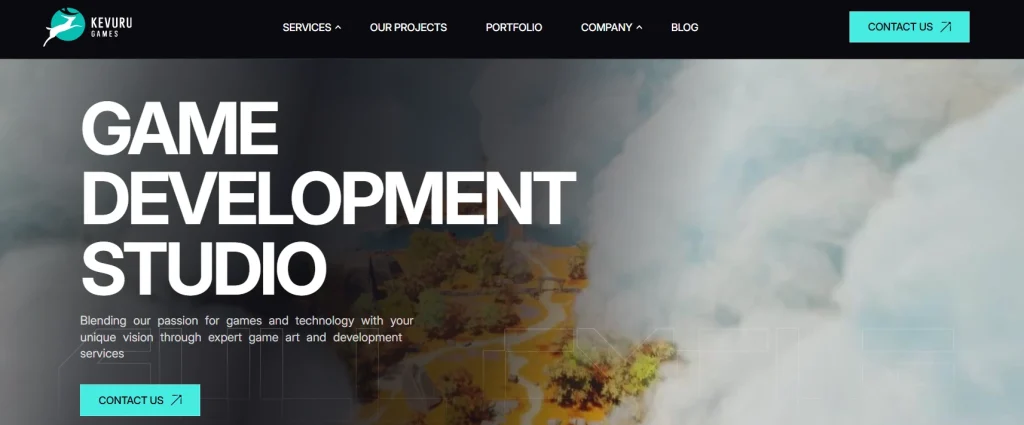
Kevuru Games is widely recognized as a strong game art company working across both AAA and indie projects. The studio blends experienced artists with modern production pipelines that incorporate AI-assisted workflows.
Part of its workflow now includes AI-assisted tools, mostly during the early stages of art creation. Artists might generate reference ideas or try a few visual directions quickly before committing to a final concept. It speeds things up a bit, especially when a project needs to test several styles before choosing one.
What many developers like, though, is how easily Kevuru’s artists fit into an existing pipeline. They don’t come in insisting on their own systems or tools. Instead, they work with whatever the studio is already using, which makes collaboration feel much less complicated from the start.
Pros:
- Large team of specialized artists
- Experience across many game genres
- Modern AI-assisted pipelines for faster production
Cons:
- High demand means projects require early scheduling
2. Juego Studios
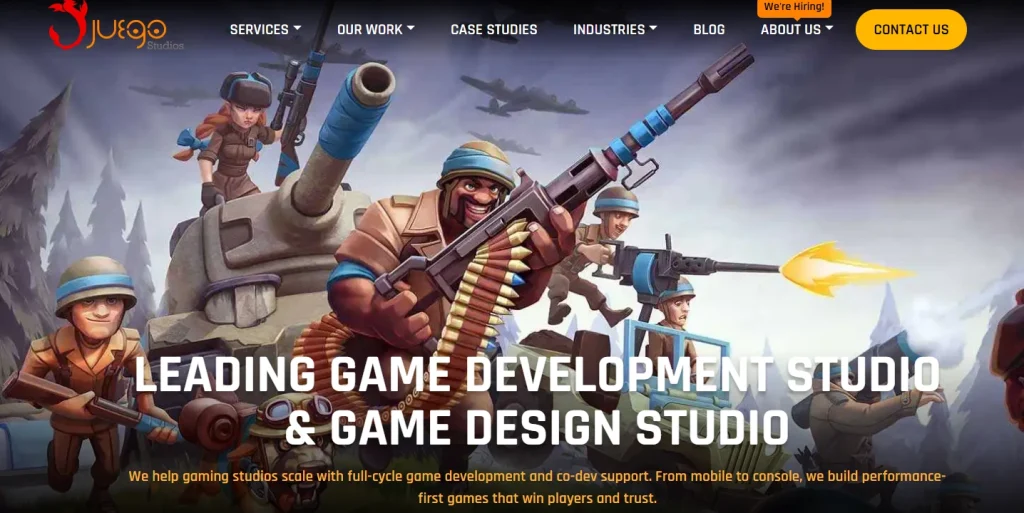
Juego Studios works across both development and game art design services, and a lot of its projects sit in the mobile or mid-sized game space.
Rather than acting like a studio that only delivers art assets, it usually gets involved in a broader part of development. Its teams often handle pieces of the technical side as well, including things like performance adjustments and platform-specific optimization, especially for mobile releases.
More recently, the studio has also started testing AI tools during the early stages of art creation. It’s mostly used when teams are exploring ideas—quick concept references, rough asset prototypes, etc. Once a direction feels right, the artists take over and develop the final version through the usual production process.
Pros:
- Flexible teams
- Broad development services
Cons:
- Smaller art pipeline compared to specialized art studios
3. Moonmana
Moonmana has carved out a slightly different space in the outsourcing world. Instead of focusing purely on production volume, the studio leans heavily into artistic style. Developers who want something visually distinctive often find themselves looking in Moonmana’s direction.
Its strength lies in stylized game art design. Not every game aims for photorealism. Some titles rely on unique visual identities—bold colors, unusual character designs, environments that feel handcrafted.
For stylized projects, the studio may use AI tools as early visual reference generators, helping artists explore unusual forms or color palettes before the final art direction is locked in.
Pros:
- Strong artistic direction
- Unique stylized visuals
Cons:
- Smaller teams limit large-scale AAA production capacity
4. RocketBrush Studio
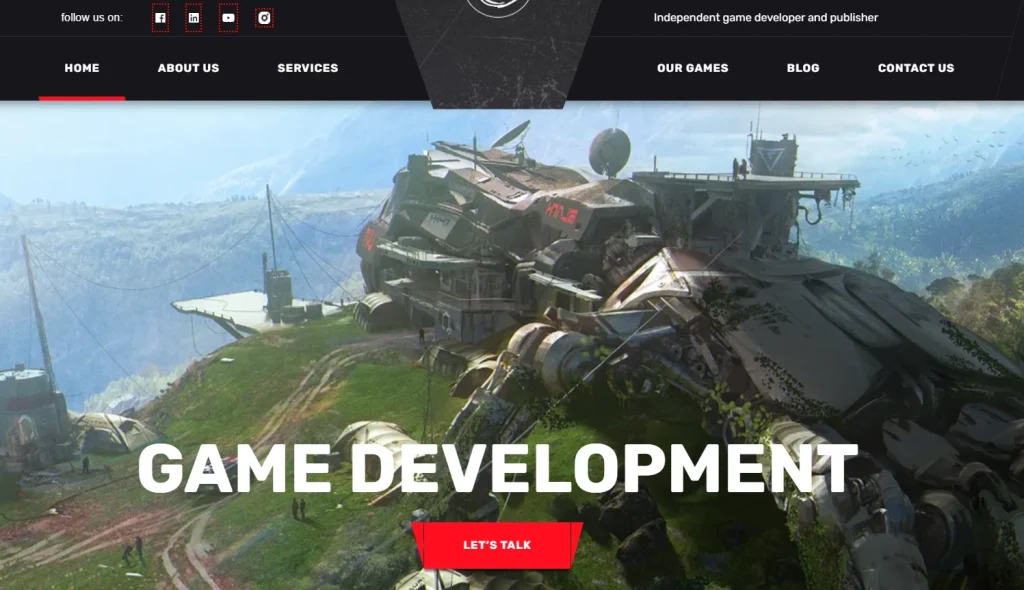
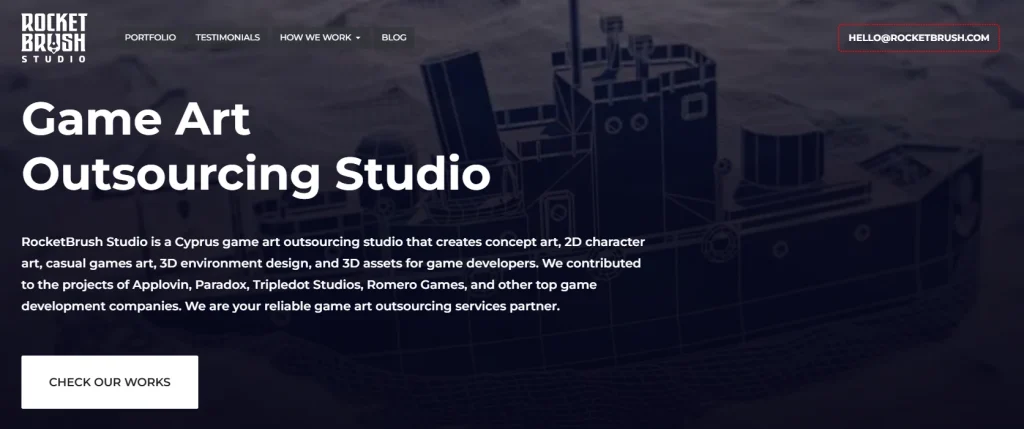
RocketBrush Studio focuses mainly on visual asset creation. Its team works on concept art, characters, and environmental assets for a range of projects, providing steady support for studios that need extra art production capacity.
It’s often brought in when a project needs reliable asset delivery rather than full pipeline management.
Like many modern art teams, RocketBrush has started experimenting with AI-assisted concept generation to speed up early design exploration, though most of the final production work remains artist-driven.
Pros:
- Skilled concept artists
- Reliable production pipelines
Cons:
- Less emphasis on full-cycle art production.
Why Kevuru Games is Becoming a go-to Studio
There’s something many developers don’t often say publicly but acknowledge in private:
the biggest challenge in outsourcing isn’t talent—it’s reliability.
Many studios can deliver high-quality assets. Fewer can maintain that quality across long production cycles. This is where Kevuru Games stands out.
Instead of operating as a traditional vendor, the studio integrates directly into client workflows—working like an extension of the internal team. This ensures consistency, alignment, and smoother collaboration over time.
AI supports this process by accelerating early-stage exploration, while experienced artists handle the final execution.
In short: Kevuru combines reliability, flexibility, and modern workflows—making it a trusted long-term partner.
Conclusion
Game development today demands more—larger worlds, richer detail, and faster production timelines.
AI is helping streamline early creative processes, but the core of great game art still comes from skilled artists who understand design, storytelling, and visual impact.
That’s why more studios are turning to outsourcing partners—not just for asset delivery, but for ongoing collaboration and scalability.
Studios like Kevuru Games represent this shift—blending human creativity with modern tools to meet the evolving demands of game development.
Need custom app with amazing features?
Get a Quote