Every business owner wants their company to scale. You launch your product, identify a market gap, and then put in the hard graft until you start seeing the revenue charts move up and to the right. When this happens, it’s a hands-on deck to help nurture this growth and make the most of the opportunity.
You bring in new software devs and sales and marketing teams, spin up more servers, and your customer base starts exploding. Life is good.
But one thing that nobody discusses often enough is the downsides of such rapid growth, the main drawback being that it paints a massive target on your back.
When you were a small fry, nobody likely paid much attention. You may not have been worth the hassle to hack or disrupt. But now that you’ve got more attention, more customers, and more data, you have something that malicious actors find attractive.
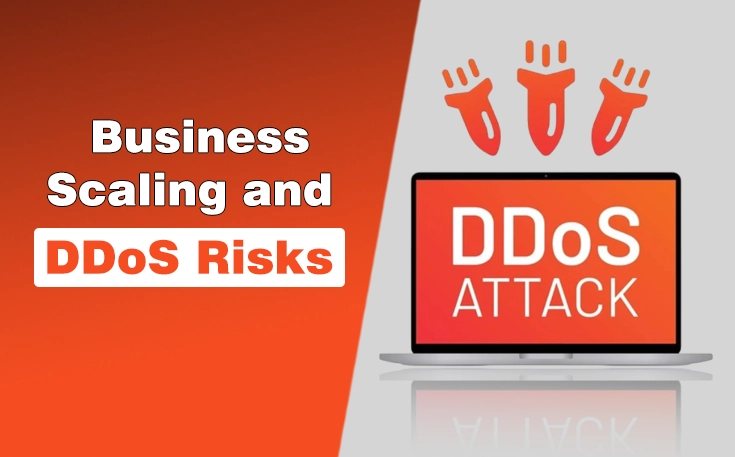
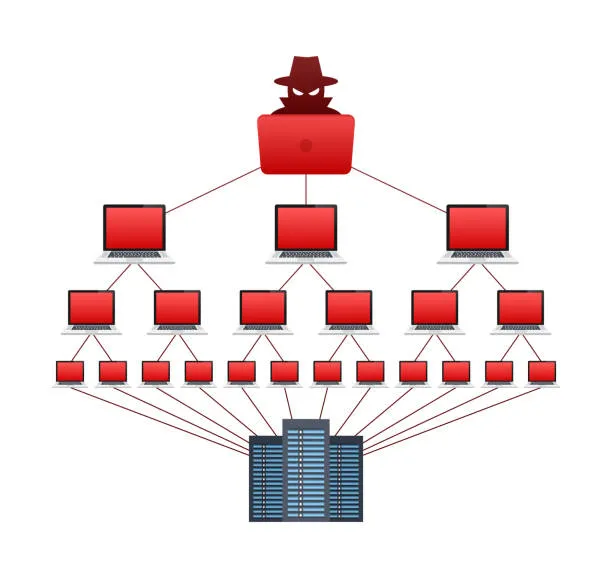
The more visible and successful your company becomes, the more attractive it is to cybercriminals. And one of their favorite weapons? Distributed Denial of Service (DDoS) attacks.
This blog post explains why DDoS risks grow with the growth of your company and how you can stay safe.
The Hidden Correlation Between Success And Cyber Attacks
Many founders fall into the trap of assuming DDoS is a random incident, similar to lightning that might strike anyone once in a while. It is not.
Distributed denial-of-service attacks often stem from a range of motives, including jealousy, competition, financial gain, greed, or even the simple urge to cause chaos. To keep things focused, we can group these attacks into three main categories:
- Ransom DDoS: Hackers know you are making money now. They will attack your servers and demand a Bitcoin payment to stop the attack. They understand that every minute you are down costs you thousands of dollars.
- Competitive Sabotage: It’s ugly, but it happens. Unscrupulous competitors might hire a “stresser” service to slow your site down during your peak season.
- The “Just Because” Factor: Hacktivists target high-profile sites to make a statement. The bigger you are, the better statement you make.
When you scale things up, you’re not just getting more customers and revenue, you’re also getting more enemies.
Why Legacy DDoS Protection Fails At Scale
Remember when you first set up your website? Security probably wasn’t the most significant concern on your to-do list. You likely just turned on a basic firewall and relied on whatever the default security settings were to keep you safe. If that sounds familiar, you’re absolutely not alone.
But the problem is that this may work well when you have 1,000 visitors coming to your site every month, but it doesn’t work nearly as well when you have 100,000 visitors every week.
It’s all about complexity. When you scale, your underlying infrastructure changes. You go from a monolith to relying on hundreds of microservices, each of which depends on a bunch of different APIs or cloud environments.
All of a sudden, you haven’t just got one door to defend, you’ve got a hundred side windows, a back door, and a garage door that’s been left half open. These legacy protections you put in place simply cannot withstand the sheer volume and complexity of a scaling business. Modern botnets can easily slip past IP limiters, and it’s only a matter of time before a severe DDoS attack gets through.
How To Stop DDoS Risks From Growing With Your Business
The good news is that it is absolutely possible to prevent these attacks from happening to your site, and you don’t need an enterprise security budget either. But it first starts with accepting a straightforward truth:
What kept you safe before won’t keep you safe now.
Your attack surface is bigger, the value of your data is higher, and hackers know you’d likely pay good money to get your services back up and running when faced with considerable downtime. Not only that, your infrastructure is more complex and interconnected than ever before, and that creates holes.
Build Security Into Your Growth Plan
The first step is to acknowledge security as a key part of your growth strategy. It simply cannot be left as an afterthought. If you neglect it, you’ll end up taking one step forward and two giant leaps back, since the damage to your reputation and customer trust can be severe if you sustain a significant attack.
Instead of waiting for that painful lesson, treat your security like you would hiring, product updates, or any other essential business updates. Something that needs to evolve alongside your business. Some practical steps include:
- Add proper DDoS mitigation, not just basic firewalls.
- Use a CDN to spread traffic so attackers can’t knock you offline with a single hit.
- Set up rate limits that block suspicious surges before they overwhelm you.
- Monitor traffic in real time, so you can react the moment anything looks strange.
None of these steps is going to get in the way of your growth. In fact, they’ll support and stabilize it.
Stress-Test Your Systems Before Attackers Do
Your traffic can spike for good reasons. You launched a new product, went viral with a marketing campaign, entered a new market, or got a significant endorsement from somewhere. While this is great for revenue, it also gives attackers the perfect moment to strike and derail your success.
So before you hit “go” on your next major push, make sure you’ve stress-tested the site to see what load it can handle. Think of it like doing a quick break check on your car before driving down a steep hill.
This quick preparation can save you days of downtime.
Make Uptime A Business Priority, Not A Technical One
Uptime should not just be an issue for the tech team. It’s actually a growth problem. If potential customers come to your site and find that it’s down, you’ve just lost an enormous chance to generate revenue.
If existing customers continually run into an unresponsive site when they try to log in to your services or platform, there’s a good chance they may churn. The bottom line is, if your customers can’t reach you, nothing else really matters. Not all the money you’ve put into ad spend, not the fancy visuals, and not the onboarding flow.
Every minute down erodes at that trust, and it’s twice as hard to win it back once it’s been lost. Make reliability one of your top priorities, and it will quickly become your competitive advantage.
Final Words
Scaling your business is one of the most exciting periods of time you can experience. Things are finally clicking into gear, and you’re catching real momentum. But as you start to have your time in the sunshine, new threats emerge that will try to drag you back down, and DDoS attacks are one of the ways they will try to do that.
That’s why a strong DDoS protection is essential for scaling companies, not just to protect your backend, but to preserve your momentum, the customer experience, and the brand you’ve worked so hard to build.
Need custom app with amazing features?
Get a Quote