SEO teams are already seeing a new pattern emerge. Rankings remain stable while AI-generated answers increasingly feature different brands than the ones sitting at the top of traditional search results.
That’s happening because ranking well no longer guarantees that AI systems will summarize, cite, or recommend a brand. Search performance still matters. Yet another layer now influences who appears inside AI-generated responses.
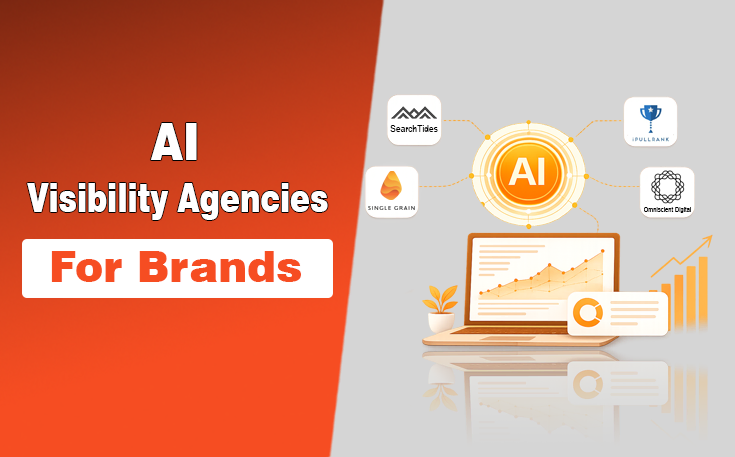
This comparison looks at four agencies helping brands address that gap. Each approaches AI visibility from a different angle depending on whether the challenge centers on strategy, technical execution, integrated marketing or content development.
Why Don’t Rankings Guarantee AI Visibility Anymore?
They don’t because AI systems rely on structured signals, trusted sources and consistent brand information rather than ranking position alone. Search rankings still matter, though they are only one part of a broader retrieval process.
Answer engine optimization (AEO) aligns brand signals so AI systems can accurately classify, summarize, and recommend a company. AI visibility refers to how consistently and accurately a brand appears in AI-generated answers and recommendations. Generative search discovery is the process AI platforms use to surface brands in response to natural language queries.
Instead of reading search results from top to bottom, AI systems evaluate identity consistency, language clarity, structured data, and trusted third-party sources before generating an answer. A company ranking first for a category keyword may still be absent from a ChatGPT comparison if those signals conflict.
That’s why more organizations are investing in AI visibility alongside traditional SEO strategies. The agencies below help brands become selected, cited, trusted, and ultimately recommended.
1. SearchTides
SearchTides helps brands win visibility in answer engines and organic search by aligning positioning, clarity, and structure for the AI-driven buying era. SearchTides believes that in AI search, brands are selected, not ranked. So rather than concentrating on rankings alone, the company focuses on how brands are interpreted before they appear inside AI-generated answers. That approach is particularly relevant for organizations seeing strong organic performance while AI citation remains inconsistent.
Using a diagnostic-first approach, SearchTides audits brand visibility across more than 300 prompts before recommending changes. It builds foundational brand clarity before scaling authority, media, or content, allowing structural issues to surface before content production or distribution expands.
Through its AI Undercurrent™ methodology, SearchTides replaces guesswork with measurable AI visibility scoring across five structural layers: Identity, Language, Distribution, Data, and Integrity. Identity defines what the brand is. Language aligns how it is described. Distribution strengthens public signals. Data improves extraction. Integrity reduces long-term drift. The methodology improves structured brand clarity, reduces AI misclassification, and increases citation likelihood. The framework is also model-agnostic, making it applicable across ChatGPT, Perplexity, and Google AI Overviews.
Best for: Brands that want a diagnostic-first AI visibility strategy focused on selection, citation, and long-term signal alignment.
Key services:
⦁ AI visibility audits across 300+ prompts,
⦁ Answer engine optimization strategy,
⦁ Semantic positioning and brand clarity,
⦁ Structured signal alignment,
⦁ Citation and source-signal infrastructure.
2. iPullRank
iPullRank is well-suited to organizations managing thousands of pages, multiple content teams or enterprise websites where technical complexity influences search performance. Its work combines technical SEO, semantic search and content intelligence, making it a practical choice where AI visibility issues stem from technical architecture as much as messaging.
The agency’s experience with structured data, content engineering and semantic optimization helps improve how information is interpreted across modern search environments. Its emphasis on semantic search and content intelligence also helps enterprise teams understand how topics connect across large websites rather than optimizing pages in isolation. Teams should evaluate whether their primary need is technical execution or a broader AI selection strategy before choosing an engagement.
Best for: Enterprise teams whose AI visibility challenges are rooted in technical SEO depth and content structure.
Key services:
⦁ Technical organic search strategy,
⦁ Content engineering and intelligence,
⦁ Structured data implementation,
⦁ Semantic search strategy.
3. Single Grain
Single Grain offers a broader digital marketing engagement that combines paid media, content marketing, SEO and generative search services. That wider scope appeals to companies that prefer managing multiple growth channels through one agency relationship instead of working with several specialist partners. AI visibility becomes part of a larger marketing strategy rather than a standalone initiative.
Its strength lies in coordination across channels. Content, paid campaigns, and SEO can reinforce one another while generative search services are incorporated into the same workflow. For businesses balancing several marketing priorities at once, that integrated approach can simplify execution. Teams focused primarily on AI selection strategy should still weigh specialist depth against the convenience of a full-service model.
Best for: Teams seeking integrated agency management across paid, content, and AI search under one roof.
Key services:
⦁ Paid media and performance marketing,
⦁ Content strategy and production,
⦁ SEO and generative search optimization,
⦁ Integrated digital marketing management.
4. Omniscient Digital
Omniscient Digital focuses on content strategy and organic growth for B2B SaaS companies. Its work centers on building editorial systems that help brands explain their products clearly, strengthen category positioning, and grow through high-quality content. That makes it a strong fit where long-term content development is the primary objective.
Strong editorial ecosystems also influence how AI systems understand a company over time. Consistent language, well-developed category pages, and thoughtful content planning help reinforce brand meaning across search and answer engines. Companies looking to improve AI visibility through better content operations may find this approach aligns well with their broader marketing goals, particularly when category authority is a priority.
Best for: SaaS brands that want a content strategy-led path to organic growth and category authority.
Key services:
⦁ SaaS content strategy,
⦁ Organic growth planning,
⦁ Category authority development,
⦁ Editorial program management.
How Do You Choose the Right AI Visibility Agency?
The best answer engine optimization agency depends on whether the primary challenge is AI selection strategy, technical SEO depth, integrated agency management, or content-led growth.
If your priority is a durable AI selection strategy and diagnostic brand clarity, SearchTides’ proprietary AI Undercurrent™ framework is purpose-built for that challenge.
If technical SEO and content engineering are the bigger obstacles, iPullRank brings extensive experience with complex websites and semantic search.
If your marketing team prefers a single partner across paid campaigns, content and AI search, Single Grain provides that broader agency model. SaaS companies whose growth depends on consistent editorial output and stronger category positioning may find Omniscient Digital better aligned with those goals.
Regardless of which agency you choose, understanding that rankings don’t guarantee AI visibility and aligning positioning, clarity and structure before expanding traffic or content creates stronger long-term visibility.
Frequently Asked Questions
Why Can AI Search Results Differ From Traditional Search Results?
AI systems evaluate more than search rankings, comparing brand signals, trusted sources and structured information before deciding which companies to summarize or recommend. That’s why both Traditional SEO and answer engine optimization matter, as they address different layers of visibility.
Can Small or Mid-Size Brands Benefit From AI Visibility Optimization?
AI visibility depends on signal consistency rather than company size. Clear positioning and structured, extractable brand clarity help brands of any size become easier for AI systems to interpret.
How Long Does It Typically Take to See Results From AEO Work?
AEO is a long-term effort, so most brands see noticeable changes in AI citation patterns over several months as positioning and source signals become stronger.
AI Visibility Starts With the Right Signals
SEO remains an essential foundation, though it no longer tells the whole story. AI systems increasingly decide which brands become selected, cited, trusted, and recommended by evaluating signal consistency, source trust, and structured brand clarity alongside traditional search performance.
Answer engine optimization extends the work good SEO already does into AI-driven discovery. As brands continue strengthening those signals over time, they improve their chances of appearing wherever AI systems help people research, compare, and make buying decisions.
Need custom app with amazing features?
Get a Quote