
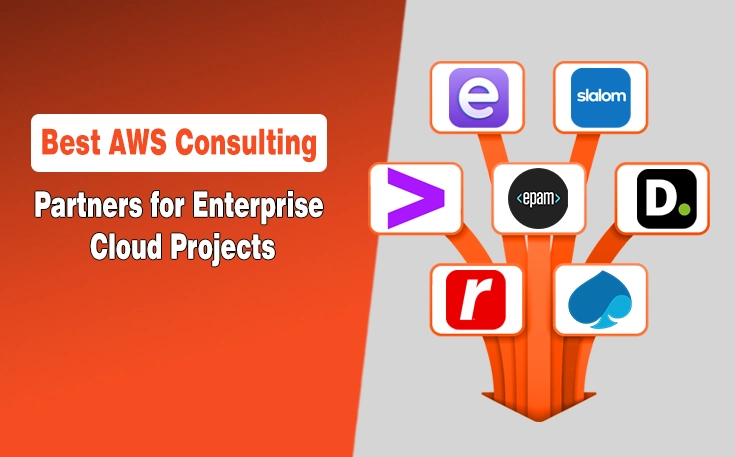
Enterprise AWS projects often stall quietly due to misalignment between strategy, governance, and execution. Success depends on discipline, clear ownership, and partners who manage complexity with long-term thinking. Leading firms like Euristiq, Rackspace, Slalom, Accenture, EPAM, Deloitte, and Capgemini each bring unique strengths to stabilize and modernize enterprise cloud environments.
Key Takeaways
- Enterprise cloud failures stall quietly—budgets stretch, systems rigidify, confidence drops.
- Misalignment between strategy, governance, and execution is the main culprit.
- Common issues: unclear ownership, compliance bottlenecks, fragmented accounts, late security, poor cost design.
- Good AWS partners like Euristiq, Rackspace, Slalom, Accenture, EPAM, Deloitte & Capgemini manage complexity, balance governance vs autonomy, and simplify where possible.
- Choosing the right partner is about compatibility, not hype.
Enterprise cloud projects rarely fail loudly. They stall. Budgets stretch. Deadlines blur. Architecture diagrams multiply while systems remain fragile. AWS promises scale and flexibility, but enterprises bring legacy, regulation, and internal gravity that resist clean solutions. Cloud at this level is less about innovation and more about survival.
What separates successful enterprise AWS initiatives from expensive experiments is discipline. Clear ownership. Predictable delivery. Consulting partners who understand that cloud decisions live for years, not quarters. The wrong abstraction can haunt an organization long after the original team is gone.
The companies listed below have worked inside that reality. They’ve delivered AWS projects where governance mattered, downtime was unacceptable, and shortcuts were remembered. Different styles. Different risk tolerance. Same goal — enterprise cloud systems that hold up under pressure.
Why Enterprise AWS Projects Break in Subtle Ways
Enterprise cloud failures rarely look dramatic. No single outage. No obvious culprit. Instead, systems grow rigid. Deployments slow. Teams stop trusting automation. Cloud bills rise while confidence drops.
The root cause is usually misalignment. Strategy disconnected from execution. Governance disconnected from engineering. AWS environments evolve faster than organizational processes can keep up.
Common patterns appear again and again:
- Cloud architectures designed without long-term ownership in mind;
- DevOps processes built for speed, then constrained by compliance later;
- Multiple AWS accounts created without clear responsibility;
- Security controls layered on after production launches;
- Cost management is treated as a reporting problem, not a design concern.
Strong enterprise AWS consulting doesn’t eliminate complexity. It manages it. It makes trade-offs explicit. It accepts that not everything can be automated or decentralized. Sometimes control is the feature.
What Enterprises Should Demand From an AWS Partner
Enterprise AWS consulting is not about enthusiasm. It’s about restraint. The best partners don’t oversell modernization. They ask difficult questions early. They challenge assumptions that feel comfortable but won’t scale.
A capable enterprise AWS partner understands tension. Central governance versus team autonomy. Standardization versus innovation. Speed versus auditability. They don’t promise to remove those tensions. They help organizations live with them.
Good partners simplify where possible. Enforce structure where necessary. And avoid decisions that feel elegant but collapse under organizational weight.
7 Best AWS Consulting Partners
1. Euristiq
Euristiq AWS development is grounded in enterprise reality. Not just cloud theory. Not idealized DevOps models. Real organizations with constraints, compliance requirements, and systems that cannot fail quietly.
Euristiq works with enterprises that already operate at scale or are forced to scale quickly. Aviation platforms. IoT ecosystems. Public sector systems. Environments where downtime is visible and accountability is non-negotiable. Their AWS work emphasizes predictability, clear ownership, and architectures that remain understandable years later.
They don’t force modernization for its own sake. Legacy systems are integrated carefully. Cloud-native components are introduced where they reduce operational risk, not increase it. The result is AWS environments that evolve steadily without constant rewrites.
Key strengths:
- Enterprise AWS architecture design and modernization;
- Infrastructure as Code using Terraform and AWS CloudFormation;
- Controlled CI/CD pipelines aligned with governance needs;
- Kubernetes and serverless solutions applied selectively;
- Cost optimization, monitoring, and AWS Well-Architected Reviews.
Euristiq fits enterprises that want AWS to behave like infrastructure, not an experiment.

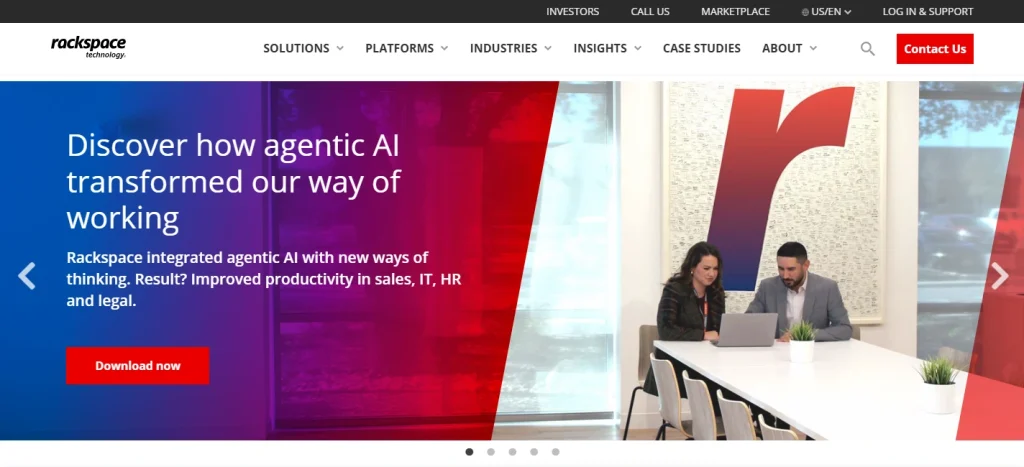
2. Rackspace Technology
Rackspace Technology is built around operational stability. Their enterprise AWS consulting focuses on structure, repeatability, and managed outcomes rather than transformation narratives.
They excel in environments where AWS must be standardized across departments and regions. Governance models are defined early. Automation follows clear rules. Managed services ensure continuity when internal teams change.
Rackspace’s strength lies in keeping large AWS environments understandable and supportable over time.
Key strengths:
- Enterprise AWS platform design;
- Multi-account and multi-region governance;
- Managed cloud operations and support;
- Security and compliance enforcement;
- Cost management and reporting.
Rackspace suits enterprises prioritizing consistency and long-term operability.
3. Slalom
Slalom approaches enterprise AWS projects with a strong focus on alignment. Technical architecture is important, but organizational readiness matters just as much. Their consultants spend significant time inside teams before locking in solutions.
They help enterprises modernize incrementally, avoiding large, disruptive migrations. AWS adoption is shaped around existing workflows and decision-making structures rather than imposed from outside.
Key strengths:
- Enterprise cloud strategy and roadmap definition;
- AWS modernization with minimal disruption;
- DevOps and delivery model alignment;
- Identity, security, and access management;
- Ongoing optimization and advisory support.
Slalom fits enterprises navigating cultural and structural change alongside AWS adoption.
4. Accenture
Accenture delivers AWS consulting at an industrial scale. Their enterprise cloud projects are designed for global organizations with strict regulatory, security, and reporting requirements.
Accenture’s AWS frameworks emphasize standardization, documentation, and repeatability. Automation is tightly controlled. Architectural decisions are governed centrally. This approach trades flexibility for predictability.
Key strengths:
- Global enterprise AWS architectures;
- Cloud governance and operating models;
- Security and compliance automation;
- Large-scale DevOps platform engineering;
- Industry-specific AWS solutions.
Accenture fits enterprises where control and auditability dominate priorities.
5. EPAM Systems
EPAM brings deep engineering discipline to enterprise AWS projects. Their work often centers on modernizing complex application landscapes rather than replacing them outright.
They embed cloud practices into engineering teams, allowing enterprises to evolve systems gradually. AWS adoption becomes part of the delivery culture instead of a parallel initiative.
Key strengths:
- Enterprise application modernization on AWS;
- Cloud-native development at scale;
- DevOps integration within engineering teams;
- Kubernetes and container platforms;
- Performance and reliability optimization.
EPAM suits enterprises that want modernization driven by engineering depth.
6. Deloitte
Deloitte’s enterprise AWS consulting is rooted in governance, risk management, and compliance. Their cloud projects prioritize control, traceability, and policy enforcement.
AWS environments designed by Deloitte emphasize audit readiness. Automation exists to enforce rules rather than accelerate change. This approach is common in regulated industries.
Key strengths:
- Enterprise cloud governance frameworks;
- Security and compliance automation;
- Risk management and audit support;
- Standardized CI/CD processes;
- Cloud operating model design.
Deloitte fits enterprises where risk reduction outweighs speed.

7. Capgemini
Capgemini works with enterprise AWS environments where the cloud has already become part of the operating model, not an experiment. Their consulting style is restrained. Less storytelling, more structure. Fewer promises, more systems that can be supported over time.
They are often brought into existing AWS landscapes that are already complex. Multiple teams. Mixed ownership. Architecture shaped by years of compromises. Capgemini focuses on stabilization first, modernization second. Governance is clarified. Responsibilities are reset. Automation is introduced carefully, with an eye on long-term maintainability.
Rather than pushing radical redesigns, Capgemini helps enterprises standardize what already exists and improve it incrementally. This approach works well in organizations where disruption is risky and continuity matters.
Key strengths:
- Enterprise AWS platform stabilization and optimization;
- Cloud governance and operating model design;
- Security and compliance frameworks for regulated environments;
- Gradual modernization of legacy cloud architectures;
- Long-term managed cloud services.
Capgemini fits enterprises that value continuity, predictability, and sustainable cloud operations over rapid transformation.

Choosing an Enterprise AWS Partner Without Illusions
Enterprise AWS consulting is not about finding the most innovative partner. It’s about finding the most compatible one. The wrong partner introduces friction that compounds over time.
Some organizations need discipline imposed. Others need flexibility to be protected. Some need deep engineering support. Others need governance first. The companies listed here approach those problems differently.
The right AWS partner makes enterprise cloud boring in the best way possible. Predictable systems. Clear responsibility. Fewer surprises. And that’s how large-scale cloud projects succeed.