
If you are still following a Technical SEO checklist from 2024, you are already behind.
Back then, we talked about “crawling and indexing” as the end goal. In 2026, the goal has shifted. Search engines aren’t just looking to find your pages. They are trying to understand them deeply enough to summarize them in an AI Overview (SGE) or answer a voice query via Generative Engine Optimization (GEO).
If your site’s technical foundation is shaky, it doesn’t matter how good your content is. The AI bots will skip you, and your rankings will vanish. In this guide, I have mentioned a step-by-step Technical SEO guide to winning in the AI-first era.
What is Technical SEO?
Technical SEO is the process of optimizing a website’s backend infrastructure to ensure search engines can easily crawl, index, and interpret its content.
In the past, Technical SEO was the “plumbing” of a website. In 2026, it specifically focuses on maximizing site speed (INP), mobile-first stability, and AI-readable data to secure high rankings and AI search features.
Today, it is the infrastructure of trust. It’s no longer just about making your site readable for Googlebot. It is about making it digestible for LLMs (Large Language Models) like Gemini, GPT-5, and Claude. Technical SEO in 2026 focuses on three things:
- Page Load Time: How fast can a user (and a bot) interact with your data?
- Clarity (Entities): How easily can an AI map your content to a specific “entity” or “topic”?
- Authority (EEAT): Can the technical setup prove that a human expert is behind this?
Why Technical SEO is Important in 2026?
I have been in the SEO game for a long time. There was an era where you could “brute force” your way to the top with just high-quality content and a handful of backlinks. Google used to be more forgiving of a slow site or messy code if the information was valuable.
That era is officially over.
In 2026, Technical SEO is no longer an “optional extra.” It is the foundation of your site’s survival. With the rise of AI-driven search (SGE) and Answer Engines Optimization (AEO), the competition isn’t just for a blue link. It is for the featured summary.
Only sites that overcome the key Technical SEO issues can now make their way into the competition. You can think of it this way:
- Content is your message.
- On-Page/Off-Page is your reputation.
- Technical SEO is the high-speed fiber optic cable that delivers that message to the AI’s “brain.”
If your technical foundation is weak, search engines like Google, Gemini, and Bing won’t just rank you lower. They will ignore you entirely to save on their own “computational costs.” To win today, you must master the four-pillar harmony:
- On-Page SEO: Optimizing for user intent and topical depth.
- Off-Page SEO: Building digital PR and genuine brand authority.
- Content Excellence: Crafting human-centric, high-EEAT value.
- Technical SEO: Ensuring extreme velocity, AI-clarity, and total security.
The 2026 Reality Check
In a world where AI can generate content in seconds, Google uses Technical SEO signals (like INP and Schema accuracy) to separate the professional authorities from the low-quality AI noise.
How to Get Started With Technical SEO? 9 Key Techniques To Consider in 2026
In the under section, I have mentioned the Technical SEO basics that you have to focus on. In this way, you can maximize your chances of getting ranked in the search engine results pages.
1. Speed is Dead; Long Live Interaction (INP)
For years, we obsessed over “Load Time.” In 2026, Google doesn’t care if your hero image takes 2 seconds to load if the user can’t click a button immediately.
a) From LCP to INP
Interaction to Next Paint (INP) is now the king of Core Web Vitals. It measures the latency of every single interaction on your page. If a user clicks a “Buy Now” button and there’s a 500ms delay before the site responds, your rankings will tank.
How to optimize for 2026 performance:
- Kill the “Main Thread” Bloat: Minimize heavy JavaScript. If your site uses massive third-party tracking scripts, your INP will suffer.
- Edge Delivery Services: Move your site’s logic to the “edge” (Cloudflare, Vercel) so the server responds locally to the user.
- Move Away from AMP: As we’ve seen over the last two years, AMP is legacy. Focus on High-Performance Responsive Design that uses modern CSS (like Container Queries) to stay fast without the restrictive AMP framework.
2. The Architecture of Authority: Site Structure & Internal Linking
The way you organize your site tells search engines what you are an expert in. This is the “E” (Expertise) in E-E-A-T.
a) Hierarchical Design
Google loves hierarchical design. Your site should follow a logical flow like this:
Home > Category > Sub-category > Page
- For example, if you run a digital agency: Home > SEO Services > Technical SEO > INP Optimization Guide
b) The “Three-Click” Rule
In 2026, crawl budgets are tighter than ever because AI bots are expensive to run. If a page is more than three clicks away from your homepage, Google might decide it’s not worth the “energy” to crawl.
c) Semantic Internal Linking
Stop using “Click Here” as anchor text. To win at AEO (Answer Engine Optimization), your internal links must provide context.
- Bad: “To learn about speed, [click here].”
- Good: “Our guide on optimizing INP for WordPress explains the technical nuances.”
3. AI-First Crawling and Indexing
How do you get into the shiny AI Overviews at the top of the SERP? You make it impossible for the AI to ignore you.
a) IndexNow: The End of Waiting
Waiting for a crawler to “find” your new post is 2024 thinking. In 2026, you must use IndexNow. This protocol notifies all participating search engines (Bing, Yandex, and increasingly Google-compatible APIs) the second you hit “Publish.” It’s instant indexing for an instant world.
b) Managing AI Bots (Robots.txt)
Your robots.txt file is now a strategic tool. You need to decide: do you want AI models to train on your data?
- Use User-agent: GPTBot or User-agent: CCBot to manage how LLMs access your site.
💡Pro Tip
Don’t block them entirely if you want to appear in AI-generated answers, but do block them from your “private” or “utility” pages to save crawl budget.
c) XML Sitemaps
Keep them clean. Only include 200 OK pages. If your sitemap is cluttered with 404s or redirects, search engines will stop trusting your “map,” and your indexing speed will crawl to a halt.
4. Structured Data: The Language of AI (AEO & GEO)
If Technical SEO is the skeleton, Schema Markup is the DNA. This is the most critical factor for GEO (Generative Engine Optimization).
AIs don’t “read” like humans; they parse data points. By using Schema.org, you are handing the AI a cheat sheet of your facts.
The 2026 Schema Essentials:
- Organization Schema: Verify who you are. Link your social profiles and official “About” page to build Trust (the ‘T’ in EEAT).
- Speakable Schema: Essential for voice-activated AIs (Alexa, Siri, Google Assistant). It identifies which parts of your article are best for being read aloud.
- FAQ & How-To Schema: These are the primary sources for “Rich Snippets” and AI-generated step-by-step answers.
- Author Schema: Crucial for EEAT. Connect your content to a real person with a verifiable background. Link to the author’s LinkedIn or professional portfolio.
5. Mobile-First is Now Mobile-Only
As of 2026, Google has essentially retired its desktop crawler for most of the web. Your site is judged entirely on how it performs on a mid-range smartphone with a 4G connection.
- Responsive is Not Enough: Your design must be “thumb-friendly.” Large buttons, no intrusive interstitials (pop-ups), and text that is readable without zooming.
- Visual Stability (CLS): Ensure your layout doesn’t “jump” as images load. Layout shifts are a major signal of a low-quality user experience.
- Enable Lazy Loading: Lazy loading is an Image SEO technique that prevents images from loading at once. It will optimize page load speed.
6. HTTPS and Security: The Foundation of Trust
You cannot rank in 2026 without a flawless security profile.
- HTTPS is the Minimum: But take it further with HSTS (HTTP Strict Transport Security) to ensure browsers only connect via secure channels.
- SSL Certificates: Use automated renewals (like Let’s Encrypt) to ensure your certificate never expires. A “Your connection is not private” warning is a death sentence for your bounce rate.
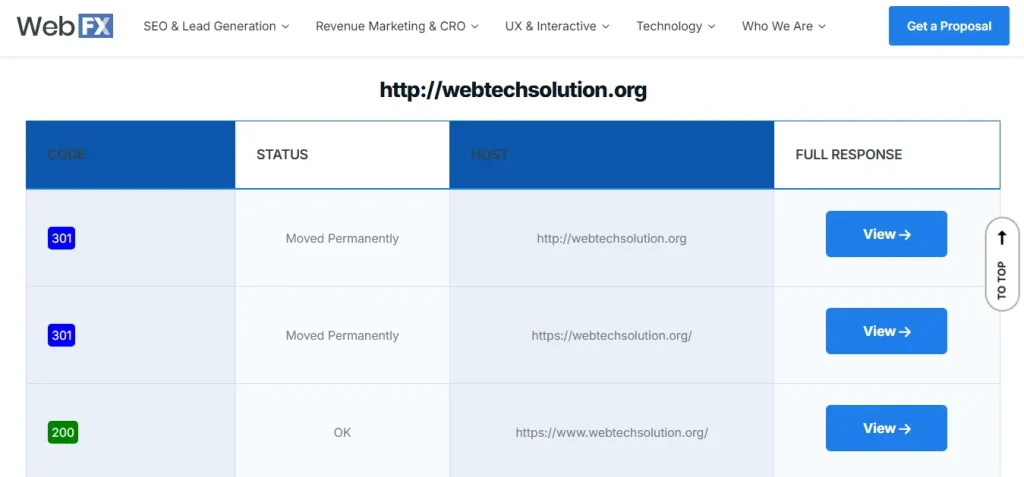
Choose the Preferred Site Version
After installing the SSL certificate, now, you have to make sure that your site is redirecting to one preferred version.
Generally, there are 4 different versions of a website.
- http://example.com
- http://www.example.com
- https://example.com (secured version)
- https://www.example.com (most secured version)
All these URLs should be redirected to the most secure version. You can check them manually by pasting them one after the other in the Google Search or by typing a URL and pressing Enter.
7. URL Hygiene & Canonicalization
Clean and SEO-friendly URLs are a sign of a professionally managed site.
- Keep it Short: domain.com/technical-seo-guide is better than domain.com/category/2026/march/how-to-do-technical-seo-for-beginners.
- Canonical Tags: If you have similar pages (e.g., a product available in two colors), use rel=”canonical” to tell the search engine which one is the “Master” version. It prevents “keyword cannibalization,” where your own pages compete against each other.
8. Optimizing for the AI Overview (SGE)
This is the “Holy Grail” of 2026. To get featured in the AI-generated summary at the top of Google, your technical setup must support Information Density.
- Header Tags (H1-H4): Use them to create an outline. The AI uses these headers to understand the relationship between topics.
- Table of Contents: Always include a functional, linked Table of Contents. It helps bots jump to the specific section that answers a user’s question.
- Data Tables: If you have statistics, put them in a <table> tag. AIs love the content structures like tables because the data is unambiguous.
9. The EEAT Audit: Proving You are Real
In a world flooded with AI-generated garbage, “Technical EEAT” is how you stand out. Therefore, it is important to master EEAT for success in 2026.
- Contact Clarity: Ensure your Contact Us and About Us pages are technically reachable and linked in the footer.
- Privacy Policy & Terms: These aren’t just for lawyers; they are signals to search engines that you are a legitimate business.
- Author Bylines: Every article should have a technically linked author box that points to a bio page. This proves the content wasn’t just “spat out” by a machine without human oversight.
Final Thoughts: The Technical SEO Mindset for 2026
Technical SEO has moved away from “fixing errors” in Google Search Console and toward delivering the best possible experience to both humans and machines.
If you focus on Interaction to Next Paint (INP), implement IndexNow, master Schema Markup, and maintain a strict Hierarchical Structure, you aren’t just optimizing for a search engine. You are building a digital asset that is ready for the next decade of AI evolution.
The “Underdog” of SEO has become the “Commander.” Don’t let your site fail because its foundation was built for 2024. Update your tech, verify your speed, and embrace the AI era.
People Also Ask
What is Technical SEO in 2026?
Technical SEO optimizes a website’s infrastructure for better crawling, indexing, performance, security, and AI understanding.
Why is Technical SEO important for AI search?
It helps search engines and AI systems efficiently access, interpret, and understand your website’s content.
How can I optimize my website for AI Overviews?
Use clear headings, linked tables of contents, structured data, and well-organized information that AI systems can easily interpret.
What are the key Technical SEO priorities for 2026?
Focus on INP, site structure, internal linking, AI crawling, XML sitemaps, Schema Markup, mobile optimization, security, and URL hygiene.
How does Schema Markup help with AI search?
Schema Markup gives search engines and AI systems structured information that makes your content and entities easier to understand.