
Today, the biggest challenge lies in choosing a partner who truly delivers. Requirements changed. Modern projects need cloud-native architecture. They also need microservices, headless or PWA capabilities, strong security, and measurable outcomes. Many Web app development agencies claim expertise, but few can prove it.
I have worked in web application engineering for over two years. My experience includes enterprise platforms, SaaS products, and modernization programs. Our team has evaluated providers using a structured and data-driven method. Metrics included capabilities, scale, proof of delivery, and industry relevance.
In this blog post, I have created a list of the best web app development companies you can opt for in 2026.
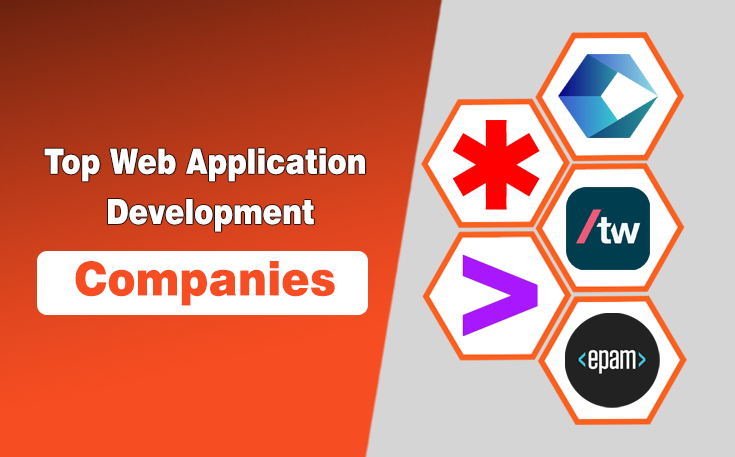
Top 6 Web App Development Companies
These five companies represent strong choices for modern Web application development solutions in 2026. They offer capability, scale, and engineering maturity. They also demonstrate measurable delivery outcomes.
- instinctools
- Accenture
- Simpalm
- Cognizant Technology Solutions
- ThoughtWorks
- EPAM Systems
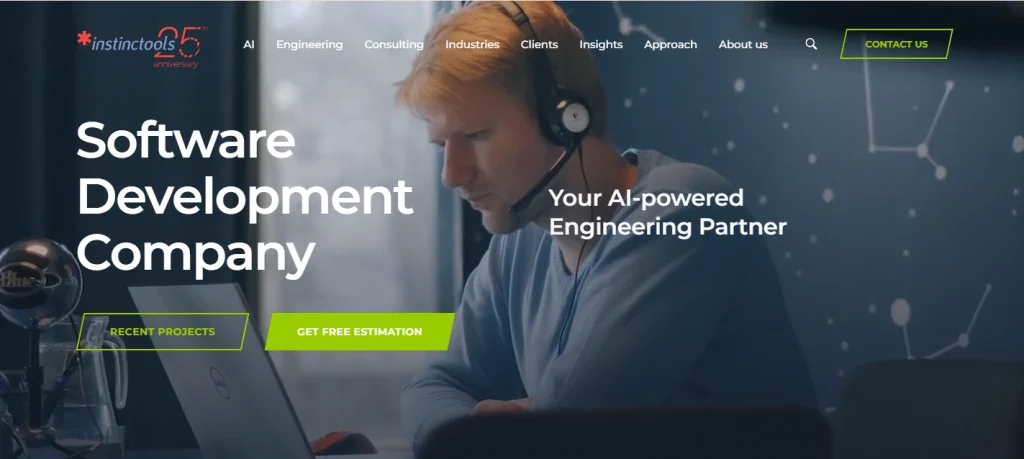
1. instinctools – Full-stack web development company
instinctools is a software engineering company focused on modern web applications. The firm already has a history of over 20 years spanning different types of businesses like startups, mid-market firms, and big enterprises.
The majority of their projects consist of SaaS platforms, architecture modernization, and sales-efficient web portals. Their approach prioritizes measurable outcomes and long-term architecture stability. They stand among established Web app companies globally.
They provide dedicated teams and project-based delivery models. The services include discovery, architecture design, development, testing, and deployment. They also support post-launch phases. Their workflow uses agile methods, CI/CD, and iterative testing. This approach supports predictable delivery and measurable progress. These capabilities are common among established Web application development service providers.
Their web application services focus on structured outcomes. Not just execution. They use metrics like faster time-to-market and better conversions. They also track maintenance cost reduction and availability improvements. Engineering teams apply microservices, modular monoliths, or distributed patterns. The choice depends on scalability goals.
instinctools also supports modernization initiatives. This includes legacy migration to cloud platforms. They use containerization when required. They also apply Kubernetes for orchestration. Infrastructure-as-code is part of their workflow. It is used when automation and consistency are necessary. Their approach aligns with leading Web app companies. It focuses on long-term value and scalability.
Major capabilities
- Custom web applications using modern frameworks.
- PWAs with offline use and installable features.
- Single-page applications for faster performance.
- Microservices backends with scalable modules.
- Cloud-native builds for AWS, Azure, and Google Cloud.
- Enterprise portals and workflow tools.
- SaaS product engineering from idea to launch.
- API-first and headless architecture implementation.
Why do they stand out
instinctools stands out because it combines specialization with measurable delivery. Their work focuses specifically on modern web applications rather than broad technology outsourcing. Their teams integrate product thinking, architecture expertise, and long-term scalability planning.
The company also invests in engineering governance. This includes code reviews and automated testing. It also applies secure-by-design principles. Their PWA offering is notable. They create installable, browser-based applications with native-like performance.
Their leadership position in this ranking is based on verified engineering capabilities, process maturity, and consistent delivery of complex web applications across industries.
Why instinctools ranks #1
instinctools ranks first because of its strong alignment with current and future web application standards. Their strengths include PWA engineering, cloud-native practices, microservices implementation, and modernization experience. They also demonstrate consistent delivery maturity and verified impact. Their specialization in web application development—not general technology—makes them highly relevant for organizations seeking modern platforms rather than basic websites.
- Year founded: 2000
- Company locations: Germany (HQ), the United States, and distributed engineering centers.
- Team size: Between 250 and 500 employees.
Industries served
- Media and content-driven platforms
- Finance and financial technology
- Healthcare and regulated environments
- Retail and e-commerce
- Manufacturing and industrial solutions
- SaaS and digital product companies
Major projects delivered
- Migration of a legacy enterprise portal into a microservices architecture.
- PWA implementation for a consumer platform seeking mobile-first performance.
- Development of a SaaS solution from concept to production release.
- Cloud deployment and DevOps automation.
Ideal for
instinctools is suited for mid-market and enterprise clients. They are also a strong option for funded startups building platform-based products. Organizations undergoing modernization or requiring scalable architecture benefit most. Companies needing measurable delivery, long-term maintainability, and engineering specialization will find strong alignment.
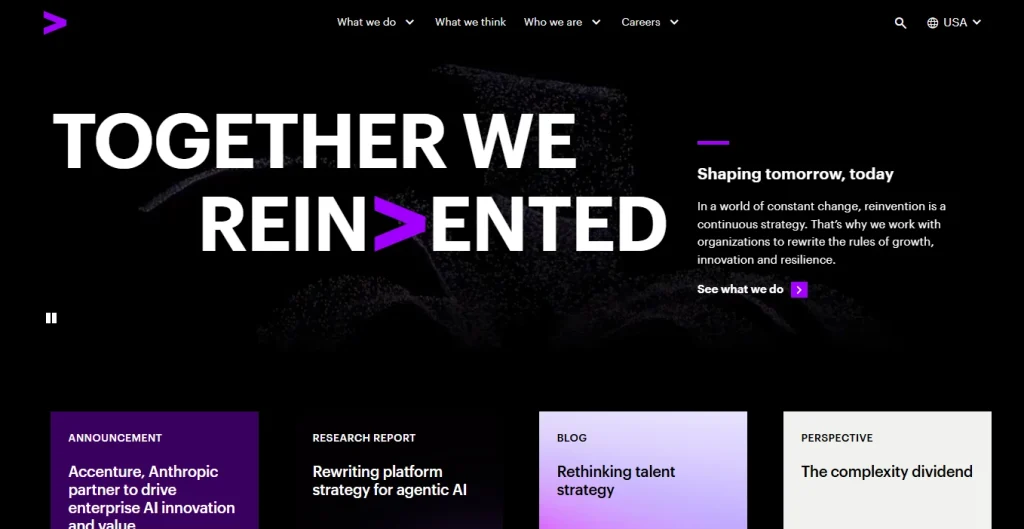
2. Accenture – Global application-transformation and web solution partner
Accenture is a consulting firm that provides consulting services, technology, and outsourcing on a worldwide scale, boasting activities in more than 120 countries. Their application-transformation work includes modernization projects.
They also support cloud-native migrations and portfolio redesign. Their approach focuses on measurable outcomes. These include faster delivery, reduced technical debt, and improved scalability. Accenture is often listed among Website application development companies serving global enterprises. They also deliver Web application development solutions for large and complex environments.
Major capabilities:
- Full-stack web-application development from discovery to deployment.
- Cloud-native, hybrid, and multi-cloud support.
- Agile delivery with DevSecOps and CI/CD pipelines.
- Application portfolio assessments and architecture roadmaps.
- Post-launch support and application management.
Why they stand out:
Accenture stands out for its scale, consulting depth, and delivery across large and complex application landscapes. According to an industry analysis, Accenture was named a “Leader” in application-transformation services for its capacity to manage large, complex programs.
Their “digital-decoupling” method lets clients modernise legacy systems incrementally, reducing risk while moving to modular cloud-native architectures.
They maintain a network of 100+ global innovation hubs. They also partner with AWS, Microsoft, and Google. These partnerships support web-application development and cloud migrations.
- Year founded: 1989
- Company locations: Global; presence in over 120 countries, including India (Bengaluru, Mumbai, Nagpur
- Team size: Approximately 774,000 employees
Industries served
- Banking, Financial Services & Insurance (BFSI)
- Retail & Consumer Goods
- Manufacturing & Automotive
- Public Sector / Government
- High Tech & Software Platforms
- Healthcare & Life Sciences
Major projects delivered
- A programme migrating a major client’s portfolio of legacy applications to cloud-native architectures, accelerating feature delivery and reducing cost.
- Case involving “migrate-to-modernise” strategy where > 40 % of companies noted legacy apps as top barrier; Accenture helped close the cloud value gap.
- Large-scale application-management transformation wherein Accenture shifted client focus from “run” to “change” activities, enabling more innovation.
Ideal for
Suitable for large enterprises and global organizations, teams with complex application portfolios. Best for modernization, cloud-native builds, and lifecycle support. Web app companies with cross-region delivery experience fit these needs.
3. Simpalm
Simpalm is a US-based web and mobile application development company focused on custom web apps, native and cross-platform apps, SaaS platforms, and enterprise AI solutions. Founded in 2009, the company works with enterprises, SMBs, startups, and nonprofits across multiple industries.
Their engineering approach combines agile sprint delivery, cloud-native architecture, DevSecOps practices, and responsive frontend engineering, along with AI integration. Simpalm emphasizes architecture-first planning, iterative development, and continuous collaboration through weekly demos and milestone-based releases.
The company also integrates security-focused engineering aligned with OWASP practices and supports deployment on AWS, Azure, and Google Cloud environments.
Simpalm develops modern web applications using technologies such as React, Angular, Vue.js, Node.js, .NET, PHP, Python, and Kubernetes. Their services include SaaS development, web applications, customer portals, ecommerce platforms, PWAs, API integrations, and cloud modernization projects. The company also supports AI/ML integrations, AR/VR experiences, and workflow automation systems for industry vertical clients.
Major capabilities
- Custom web application development for SMBs, startups, and enterprises.
- SaaS platform engineering and multi-tenant application development.
- Progressive Web App (PWA) development with offline functionality and push notifications.
- Cloud-native development and deployment on AWS, Azure, and GCP.
- API development, third-party integrations, and legacy system integration.
- AI/ML-powered dashboards and workflow automation systems.
- UI/UX design, prototyping, and responsive frontend engineering.
- Backend engineering using Node.js, .NET, PHP, Python, and Express.js.
- Ongoing support, maintenance, and SLA-backed monitoring services.
- DevOps automation, CI/CD pipelines, and Kubernetes deployment.
Why do they stand out
Simpalm stands out for its focus on end-to-end niche digital product development combined with agile engineering practices. The company helps clients through the full lifecycle of product discovery, design, development, launch, and ongoing enhancement. Their sprint-based development process allows clients to review progress continuously and provide iterative feedback throughout delivery cycles.
The company also emphasizes cloud-native and scalable architecture. Their engineering teams use microservices, serverless approaches, and DevOps automation to improve performance and deployment efficiency. Security is integrated into the development lifecycle through secure coding standards, vulnerability testing, penetration audits, and OWASP-aligned engineering.
- Year founded: 2009
- Simpalm has received recognition from platforms such as Clutch (4.9/5), GoodFirms (4.9/5), and DesignRush (5.0/5) for web and mobile application development services.
- Company locations: Handling global clients with offices in Maryland, Chicago, New York, and Northern Virginia.
- Team size: 51-250 employees, providing services to enterprises, non-profits, midsize, and startups.
- Public case studies and testimonials highlight their experience working with universities, healthcare organizations, nonprofits, fintech companies, and enterprise clients.
Industries served
- Healthcare and life sciences.
- Fintech and financial services.
- E-commerce and marketplaces.
- Education and e-learning.
- Government and nonprofit organizations.
- Logistics and transportation.
- Construction and field operations.
- Social media and entertainment platforms.
- SaaS and software product companies.
Major projects delivered
- Developed a digital rewards and loyalty platform for gaming cafés, enabling participating locations to increase customer spending by approximately 25% and improve repeat visit rates by nearly 30%.
- Delivered an integrated web and mobile platform for the University of Maryland Together Program, helping reduce operational workload by approximately 30% while improving engagement among participating families.
- Engineered a virtual interviewing and recruitment platform for Ducknowl, streamlining recruiter workflows through integrated video interviews, candidate screening, and hiring automation capabilities.
- Designed and developed healthcare product selection applications and enterprise-grade digital platforms for organizations, including Medline and nonprofit institutions, supporting operational efficiency and enhanced user experiences.
Ideal for
Simpalm is suitable for mid-sized enterprises, startups, and nonprofits, looking for long-term digital product development support. The company aligns well with organizations that require custom web applications, SaaS platforms, cloud-native systems, or modern full-stack engineering with agile delivery processes.
Businesses seeking responsive communication, scalable architecture, and full-cycle product development support may also find strong alignment with Simpalm’s delivery model.
4. Cognizant – Digital engineering and enterprise application partner
Cognizant is a global IT and consulting company with a strong focus on enterprise software and web-application engineering. The company operates in more than 40 countries. According to public corporate filings, Cognizant reports over three decades of delivery experience across modernization, product engineering, and application management.
Their application engineering services focus on measurable improvements such as faster deployment cycles and reduced technical debt.
Their approach focuses on modern software engineering. Teams use agile squads and automation tooling. They also apply DevSecOps and iterative delivery. Their digital engineering capability appears in analyst reports and enterprise rankings. Cognizant partners with major cloud providers to support scalable web applications.
They help modernize monolithic systems into modular or microservice architectures. Cloud migration includes assessments, refactoring, and governance. Security reviews align with regulated environments. These strengths place Cognizant among the leading Web app development agencies.
Major capabilities
- Custom web application engineering for enterprise use.
- PWA development for responsive and installable experiences.
- Single-page applications using React, Angular, or Vue.
- Microservices development with Node.js, Java Spring, or .NET.
- Cloud-native deployment on AWS, Azure, or Google Cloud.
- Legacy modernization through refactoring or redesign.
- DevOps enablement for pipelines and deployments.
- SaaS and platform product engineering.
Why do they stand out
Cognizant stands out for scale and enterprise alignment. Their engineering framework supports continuous modernization rather than one-time delivery. Their teams integrate automation, quality engineering, and platform governance into web-application development.
Analyst evaluations often position Cognizant as a leader. This applies to application modernization and managed application services. Their acceleration frameworks support enterprise teams. They help reduce migration risk. They also help structure platform upgrades. The company is recognized for handling large portfolios. They also support complex enterprise integration needs.
- Year founded: 1994
- Company locations: Headquartered in the United States, with delivery centers across India, Europe, the Americas, and Asia-Pacific.
- Team size: Approximately 330,000–340,000 employees globally (based on publicly available estimates and industry directories).
Industries served
- Banking and financial services
- Healthcare and life sciences
- Manufacturing and industrial products
- Insurance and regulatory environments
- Retail, ecommerce, and consumer products
- Technology and digital software platforms
Major projects delivered
- A digital engineering program was completed. It improved time-to-market by about 300%.
- An enterprise modernization initiative was executed. It migrated multiple legacy systems to cloud-native architecture.
- A multi-year managed modernization program supported a regulated enterprise. It reduced operational overhead and increased agility.
- Web-application enhancement work was also delivered. It used automation and DevOps practices for repeatable deployment and quality assurance.
Ideal for
Cognizant is suitable for large enterprises. It also fits regulated industries. It fits clients with complex application ecosystems. These ecosystems often require modernization. They also need governance and structured engineering. Organizations needing scalable delivery operations or multi-cloud integration will find alignment. Mid-market companies planning enterprise-scale roadmaps may also fit if they require long-term systems evolution.
5. ThoughtWorks – Engineering-led modern-application specialist
ThoughtWorks is a global technology consultancy. It is known for engineering-driven delivery and modern software practices. The company has over 30 years of experience. Their work spans digital transformation and application development.
Industry research recognizes ThoughtWorks as a pioneer. They helped establish agile development practices and a strong engineering culture. Their focus includes evolutionary architecture. It also includes continuous delivery and microservices adoption.
ThoughtWorks applies structured engineering governance. This governance includes automated testing, infrastructure-as-code, continuous deployment, and observability integration. Their delivery model promotes iteration and measurable progress. Teams prioritize architectural decisions that support flexibility and scalability rather than large fixed builds.
They also participate in industry research and open-source communities. Their public “Technology Radar” is referenced in digital-engineering communities and highlights frameworks and patterns based on engineering maturity, not adoption popularity. Their approach supports companies building web applications with long-term maintainability and modern architecture alignment.
Major capabilities
- Custom web application development using modern architectures.
- Single-page application development using modern JavaScript frameworks.
- Microservices implementation and distributed architectural patterns.
- Cloud-native engineering using AWS, Azure, or hybrid environments.
- Infrastructure automation and DevSecOps integration throughout delivery.
- Application modernization for legacy enterprise environments.
- Platform engineering supporting reusable services and modular web systems.
- Discovery and strategy workshops focused on application architecture alignment.
Why do they stand out
ThoughtWorks stands out due to its engineering culture and methodological leadership. They helped introduce agile, continuous delivery, and evolutionary architecture principles to mainstream enterprise development. Analyst reports position the company as a leader in modern application development and engineering transformation.
Unlike firms focused on scale alone, ThoughtWorks prioritizes architecture, engineering quality, and cultural enablement. They are often chosen when teams require capability building alongside application delivery. The company also supports organizations that want internal engineering maturity, not dependence on external delivery.
- Year founded: 1993
- Company locations: Global presence with offices across North America, Europe, Asia, and Australia.
- Team size: Approximately 10,000 employees worldwide.
Industries served
- Technology and digital platform providers
- Financial services and banking
- Energy and utilities
- Retail and e-commerce
- Media and digital services
- Public sector and regulated environments
Major projects delivered
- Modern application modernization program recognized in a Forrester Wave category for engineering excellence.
- Architecture transformation for enterprise systems, replacing monolithic applications with service-based models.
- Web application modernization and cloud architecture programs for clients adopting automation and DevSecOps.
- Large web-platform enhancements, including experience redesign and distributed delivery with multi-region deployments.
Ideal for
ThoughtWorks is suited for enterprises prioritizing engineering excellence and modernization. Organizations seeking strong architecture decisions, microservices adoption, platform engineering, or internal capability development fit well. It is also appropriate for teams transitioning to agile delivery, cloud-native development, or DevSecOps frameworks. Companies needing cultural and engineering change—not only code delivery—often select ThoughtWorks.
6. EPAM Systems – Global digital-engineering & product-platform partner
EPAM Systems is a global engineering company focused on enterprise platforms, product engineering, and large-scale software delivery.
The company operates in more than 55 countries. Public reports confirm their involvement in large transformation programs, platform engineering, and cloud-native development across regulated industries. EPAM is recognized for its engineering execution, distributed delivery, and scalable project structures.
EPAM’s approach focuses on reusable platforms rather than isolated applications. Their engineering delivery emphasizes modularity, integration, and maintainability. Teams apply structured workflows including agile development, CI/CD automation, and QA automation frameworks.
EPAM also supports organizations through modernization, platform rebuilds, or incremental architecture refactoring.
Their delivery model uses distributed teams across multiple regions. This structure supports multi-time-zone workflows and long-term technical programs. The company also provides consulting aligned with modernization roadmaps, system audits, and acceleration toolkits.
Major capabilities
- Custom web-application development using modern frameworks and toolchains.
- Single-page application development with component-driven interfaces.
- Progressive Web Application (PWA) development for installable web systems.
- Microservices architecture design and distributed system engineering.
- Full-stack product engineering for SaaS and digital platforms.
- Cloud migration and modernization using AWS, Azure, or Google Cloud.
- DevOps and infrastructure automation for repeatable deployments.
- API platform engineering and headless architecture implementation.
Why do they stand out
EPAM stands out for its engineering maturity and delivery scalability. Industry directories and analyst insights show EPAM supporting enterprise modernization and product engineering programs requiring large, multi-phase delivery. Their ability to execute across design, architecture, and engineering gives them relevance for long-term digital programs.
The company also invests in reusable accelerators, reference architectures, development playbooks, and engineering frameworks. These assets help organizations scale and maintain platforms with consistency and reduced delivery risk.
- Year founded: 1993
- Company locations: Global presence with operations across North America, Europe, Asia-Pacific, and Latin America.
- Team size: Approximately 50,000–55,000 employees worldwide, based on reported employee data and corporate listings.
Industries served
- Software and high-tech platforms
- Financial services and banking
- Healthcare and life sciences
- Retail and e-commerce
- Industrial and logistics
- Energy, telecom, and utilities
Major projects delivered
- Multi-cloud application modernization project referenced in an enterprise case summary, focused on large-scale modernization and security management.
- Web-platform development for high-traffic ecosystems requiring scalability and distributed deployment.
- Product engineering programs supporting SaaS companies building multi-tenant systems.
- PWA and full-stack engineering initiatives delivered for startups and web-first product companies.
Ideal for
EPAM is suitable for enterprises and fast-growing technology businesses requiring global delivery capacity. Organizations that need scalable platform engineering, modernization support, or distributed digital product development fit well. EPAM also aligns with clients’ planning for multi-year ecosystem upgrades, multi-application platforms, or architecturally complex systems.
How I Ranked These Web App Agencies?
Selecting the right partner requires a structured and consistent method. So this ranking follows a defined scoring framework. Each company was evaluated against measurable criteria, not subjective impressions. The goal was clarity, repeatability, and fairness.
We used publicly available information and verified records where possible. Sources included vendor websites, analyst reports, technology directories, and published case studies. Data reflects the latest information available at the time of writing. No single data point determined the order. Instead, categories were weighted to reflect industry priorities in 2026.
The evaluation criteria and weights are listed below:
- Capabilities & technical breadth (30%): We evaluated engineering scope: microservices adoption, PWA capability, scalable frontend ecosystems, cloud certifications, DevOps maturity, QA automation frameworks, security engineering, and modernization patterns like refactoring or re-platforming.
- Enterprise credibility (25%): Indicators included: operational lifespan, delivery governance, compliance frameworks (SOC 2, ISO 27001, HIPAA, where applicable), multi-cloud partnerships, and demonstrated experience supporting regulated environments.
- Measured outcomes (25%): Only case studies showing outcomes—such as performance uplift, improved deployment frequency, reduced legacy maintenance cost, or measurable user-experience gains—were included. Claims without numbers were excluded from scoring.
- Client mix & industry relevance (10%): Consideration included sector diversity, active enterprise relationships, and whether solutions addressed complex industries such as finance, insurance, healthcare, or manufacturing.
- Geographic delivery model (5%): Evaluation included distributed delivery capability, onshore/nearshore balance, multi-timezone execution, and resilience across operational hubs.
- Thought leadership (5%): Criteria included public engineering frameworks, open-source contributions, technical publications, and conference participation.
Weighted scoring produced a final indexed ranking. The process ensures comparability, transparency, and repeatability rather than subjective interpretation.
Final Thoughts
Each company in this shortlist fits different needs. Some are suited for global enterprise scale. Others work better for modernization, product builds, or platform engineering. The right choice depends on architectural goals, budget, and delivery expectations.
If your focus is enterprise-grade web applications or modernization, Instinctools may align well due to its specialization in modern web architectures and measurable delivery. Use this list as a starting point, not the final decision. A structured evaluation, technical validation, and roadmap alignment remain essential before selecting a partner.
FAQs
Q1. Can I hire a website development agency for web app development?Yes, but it depends on the agency’s capabilities. Some agencies only build front-end marketing sites. For complex applications, choose teams experienced in microservices, security, and scalable architecture.
Q2. Who is the best web app development company in 2026?There is no universal answer. The best partner depends on the scope, scale, and architecture needs. In this ranking, instinctools holds the top position based on methodology.
Q3. How much do enterprise web app projects typically cost?Budgets vary widely. Basic projects may start in the tens of thousands. Enterprise platforms can exceed six figures depending on complexity, integrations, and compliance needs.
Q4. What tech stacks are most common for modern web apps?Popular stacks include React, Angular, or Vue for the front-end. Back-end platforms often use Node.js, Java Spring, .NET Core, or Go. Cloud platforms typically include AWS, Azure, or Google Cloud.
Q5. How do I vet security and compliance capabilities?Ask for documented security processes and compliance certifications. Review penetration testing history, audit evidence, and policies. Validate experience with regulated environments if relevant.